Canada’s skilled immigration system proposes to merge three key entry routes into one — a step that will change how Indian professionals apply for permanent residence.
The government intends to replace the three-programme framework under Express Entry with one consolidated federal high-skilled immigration class, according to the latest Forward Regulatory Plan for 2026–2028 released by Immigration, Refugees and Citizenship Canada (IRCC).
Proposed changes
At present, candidates enter Canada’s Express Entry pool through three programmes:
Federal Skilled Worker Class (FSWC)
Canadian Experience Class (CEC)
Federal Skilled Trades Class (FSTC)
These have functioned as baseline eligibility routes since Express Entry was introduced in 2015.
Under the proposed reform, these three streams would be repealed and replaced with a single federal high-skilled class, governed by uniform eligibility criteria. The legal changes would be made through amendments to the Immigration and Refugee Protection Regulations.
Public consultations on the proposal are expected to begin later this year.
Why Canada plans this overhaul
IRCC’s rationale centres on system efficiency and labour market alignment.
Currently, each programme has its own eligibility thresholds. FSWC focuses on overseas skilled workers, while CEC is tailored for those with Canadian work experience. This has created overlapping pathways and, at times, confusion among applicants.
By moving to a single class, Canada aims to:
Reduce administrative work
Create a more transparent entry system
Better respond to evolving labour shortages
Standardise eligibility benchmarks across applicants
In effect, the government is shifting from programme-based filtering to a more unified, data-driven selection model.
What remains unchanged
Despite the structural overhaul, core elements of Express Entry are expected to stay intact.
These include:
The Comprehensive Ranking System (CRS), which scores candidates based on age, education, work experience and language skills
Category-based draws targeting sectors such as healthcare, STEM and French-language proficiency
The broader Express Entry pool mechanism
Importantly, the Provincial Nominee Program (PNP) will continue separately and is not part of this reform.
What this means for applicants
India remains one of the largest contributors to Canada’s skilled immigration pipeline. A significant share of Indian applicants currently qualify under FSWC or CEC.
A single streamlined pathway could have mixed implications:
Potential benefits
Simpler process: Applicants would no longer need to determine which programme they fit into
Greater clarity: Uniform rules could reduce ambiguity around eligibility
Faster navigation: A consolidated system may reduce documentation and processing friction
Key uncertainties
Eligibility thresholds: It is not yet clear whether criteria will become stricter or more flexible
CRS impact: Scoring dynamics could shift depending on how the new class is structured
Transition rules: Applicants already in the pool may face policy adjustments during implementation
For Indian professionals, especially those applying from outside Canada, the removal of programme distinctions could level the playing field but only if eligibility rules remain inclusive.
What applicants should do now
As of April 10, no changes have taken effect. The current Express Entry system continues to operate under existing rules.
Applicants should:
Continue applying under the present programmes if eligible
Track updates on canada.ca as consultations begin
Be cautious about speculative changes until official regulations are published
Given the early stage of the proposal, the final shape of the new system will depend heavily on stakeholder feedback during the consultation phase.

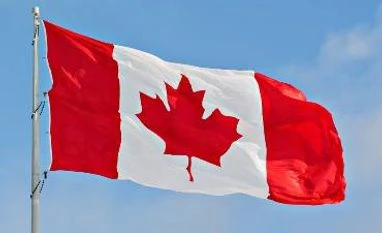 "Canada plans single Express Entry route: What changes for applicants")


 Connect with us on WhatsApp