Getting an H-1B visa takes more than skills and a job offer. It often comes down to chance.
That is a lesson learned the hard way by Sunjana Ramana, an Indian-origin data and AI engineer, who has decided to leave the United States after repeated failed attempts to secure an H-1B work visa.
In a LinkedIn post, Sunjana Ramana said her decision had nothing to do with ambition or ability, but with a system that left her with few choices.
“Four-and-a-half years ago, I landed in the US with $80,000 in student debt and a stubborn belief in the American Dream,” she said.
From student debt to six-figure job
Ramana described a path that many international students hope will lead to long-term work status in the US. She earned an Ivy League education, secured a six-figure job in the technology sector, and paid off her student loans.
Along the way, she spoke on global platforms such as TEDx and launched her first software-as-a-service product.
None of it, she said, was enough to overcome the H-1B lottery.
“After three H-1B attempts, the answer was still no,” she said. “It’s hard to explain how much it hurts to do everything right… and still lose.”
Calling this a shared experience for immigrants, she added: “You can do everything right and still have no control over the outcome.”
Rather than returning to India, Ramana said she will begin a new chapter in the UK, with plans to move to London.
“They say, if you can make it in New York, you can make it anywhere,” she wrote. “America, thank you for the opportunities and the growth. This isn’t goodbye forever.”
She said persistent visa hurdles were the deciding factor behind her move.
Why the H-1B lottery matters
The H-1B visa is the main route for US employers to hire foreign professionals in speciality occupations. Each year, the government makes 85,000 visas available.
• 65,000 visas are open to all eligible applicants
• 20,000 visas are reserved for those with a US master’s degree or higher
When applications exceed this cap, as they routinely do, US Citizenship and Immigration Services runs a computerised lottery to decide who can apply.
Critics say this system rewards luck rather than talent.
In a statement last year, Jeremy Neufeld, director of immigration policy at the Institute for Progress, said the lottery discourages employers from targeting highly skilled candidates because there is no certainty of selection.
He estimated that US employers spend more than $1.9 billion each year recruiting H-1B applicants who ultimately are not chosen.
How the H-1B system is about to change
The experience Ramana described may not play out the same way in future years.
The US Department of Homeland Security has finalised changes to how H-1B visas are selected, replacing the pure lottery with a wage-weighted system that favours higher-paid roles.
The new rule takes effect on February 27, 2026, and will apply to the FY 2027 H-1B cap registration.
“Overall, this administration has made its priorities clear,” said Xiao Wang, chief executive of Boundless, in a blog post. “US immigration policy is increasingly focused on attracting the highest-paid individuals from around the world. Employers need to adapt quickly.”
What is changing under the new rule
Under the revised system, registrations will no longer be selected entirely at random.
• Each registration will receive a weighted number of entries based on the offered wage
• The weighting will use the Department of Labor’s four-tier Occupational Employment and Wage Statistics system
• Higher wage levels will carry better odds of selection
Lower-paid roles can still be registered, but their chances will be slimmer.
What stays the same
Despite the overhaul, several core features of the H-1B programme remain unchanged.
• The annual cap stays at 65,000 visas, plus 20,000 for US advanced degree holders
• Entry-level workers are not barred from the process
• Employers can continue to use alternate prevailing wage surveys, if they meet minimum wage level rules
• Labour Condition Application procedures remain the same

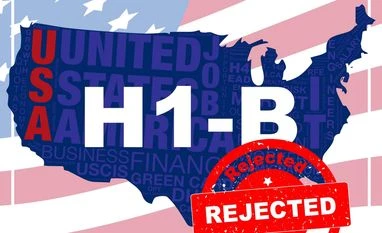 "H-1B visa woes: Why this Indian techie left the American dream for UK")


 Connect with us on WhatsApp