
Aiims Delhi issues guidelines for Covid-19 suspected, positive patients
It further asked all the departments at the institution to make provisions in their respective designated wards to manage in-patients who have tested positive for Covid-19
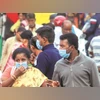 "Aiims Delhi issues guidelines for Covid-19 suspected, positive patients")
WebinarsNew
Deep DiveNew
Explore Business Standard
It further asked all the departments at the institution to make provisions in their respective designated wards to manage in-patients who have tested positive for Covid-19
The All India Institute of Medical Sciences (Aiims) of Delhi has issued guidelines for Covid-19 suspected or positive cases that will be reported at hospitals following the sudden surge in the cases of Coronavirus in the country.
Aiims Delhi director held a meeting with all heads of departments of the hospital on COVID-19 contingency measures on Wednesday. In the meeting, policy on COVID-19 testing, the areas to be designated for positive patients and their hospitalisation was discussed.
As per the policy on COVID-19 testing, directed by the management, testing will be done for patients with SARI (severe acute respiratory infection) like symptoms that include according to the WHO, acute respiratory infection, persistent fever or fever of >= 38 C° with cough and onset within last 10 days.
The office memorandum was issued after the meeting.
It further asked all the departments at the institution to make provisions in their respective designated wards to manage in-patients who have tested positive for COVID-19.
"12 beds in the C6 ward will be earmarked for hospitalization of seriously ill COVID-19 patients," the memorandum said.
It also said that a screening OPD in the Emergency Department will screen patients for COVID-like symptoms and triage them same based on the medical requirements.
"Rooms no 1 to 12 in the new private ward are to be earmarked for hospitalization of COVID-19 positive EHS beneficiaries," it added.
"Engineering works in the New Blocks, Masjid Moth Campus--The ESD is required to install UVGA filters and HEPA filters in all the new blocks situated in the Masjid Moth Campus at the earliest," it said further.
Notably, the national capital has reported the first case of JN.1 variant infection.
"Delhi has reported the first case of JN.1, a Sub-Variant of Omicron. Out of the 3 samples sent for Genome Sequencing, one is JN.1 and the other two are Omicron," Bharadwaj told ANI.
Meanwhile, a total of 109 JN.1 COVID variant cases have been reported in the country as of December 26, Health Ministry sources said on Wednesday.
The World Health Organization (WHO) recently classified JN.1 as a variant of interest, distinct from its parent lineage BA.2.86. However, the global health body emphasised that the overall risk posed by JN.1 remains low based on current evidence.
(Only the headline and picture of this report may have been reworked by the Business Standard staff; the rest of the content is auto-generated from a syndicated feed.)
First Published: Dec 27 2023 | 11:35 PM IST


 Connect with us on WhatsApp