A Rajasthan court has accepted a petition alleging that the Ajmer Sharif Dargah is a Shiva temple. This development follows a recent court-mandated survey of the Shahi Jama Masjid in Sambhal, Uttar Pradesh, which triggered protests and led to the deaths of five Muslims, including a minor, allegedly in police firing.
The petition was filed by Vishnu Gupta, leader of the right-wing Hindu Sena. Subsequently, an Ajmer lower court issued notices to three entities regarding claims of a Shiva temple within the premises of the revered shrine dedicated to Sufi saint Khwaja Moinuddin Chishti.
Civil Judge Manmohan Chandel, presiding over the case, has sought responses from the Ajmer Dargah Committee, the Ministry of Minority Affairs, and the Archaeological Survey of India (ASI). Advocate Yogesh Siroja, representing the petitioner, stated that the notices were issued in connection with the lawsuit filed in September.
Call to declare Ajmer dargah as ‘Sankat Mochan Mahadev Temple’
The petitioner, Vishnu Gupta, demanded that the dargah be officially declared as the “Sankat Mochan Mahadev Temple.” He has also requested an ASI-led survey of the site to establish its historical and religious significance. Additionally, he called for the cancellation of all registrations associated with the dargah and the restoration of Hindu worship rights at the site.
Gupta’s plea stated: “Our demand is that the Ajmer dargah should be declared as the Sankat Mochan Mahadev Temple. If the dargah has any kind of registration, it should be cancelled. Its survey should be conducted by the ASI, and Hindus should be granted the right to worship there.”
The case is scheduled for its next hearing on December 20.
AAP MP calls for SC intervention
Reacting to the development, Aam Aadmi Party (AAP) MP Sanjay Singh urged the Supreme Court to intervene, citing the Places of Worship Act, 1991. Singh said, “The Act clearly states that religious structures must remain as they were on August 15, 1947. If such precedents of claiming temples beneath mosques or vice versa continue, it will lead to nationwide chaos. PM Modi and the BJP are fueling these conflicts, and I call them the Bharatiya Jhagda Party.”
What is the Places of Worship Act, 1991?
The Places of Worship (Special Provisions) Act, 1991, was enacted to preserve the religious character of all places of worship as they existed on August 15, 1947. Introduced against the backdrop of communal tensions, the Act aims to prevent legal disputes and conversions of religious sites, ensuring a foundation for interfaith harmony.
The law prohibits the conversion of any place of worship, whether partial or complete, from one religion to another. It seeks to protect the sanctity and historical identity of such sites.
Section 4 mandates that the religious character of all places of worship remains as it was on August 15, 1947, reinforcing historical continuity and respect for diverse traditions.
The Act invalidates all legal cases concerning the conversion of religious sites arising before 1947 and prohibits the filing of fresh lawsuits on this matter. However, the Ram Janmabhoomi-Babri Masjid dispute was excluded from its purview, as it was already under judicial scrutiny when the Act was passed.
Which other mosques or monuments face such claims?
Religious conflicts involving mosques and dargahs have intensified, often leading to unrest.
• Gyanvapi mosque, Varanasi: Hindu groups claim the mosque was built atop a Hindu temple. A 2022 court-ordered survey led to disputes over a supposed shivling, which the Muslim community argued was a fountain.
• Shahi Idgah mosque, Mathura: Hindu groups assert that this mosque was built on a sacred Hindu site. The Supreme Court’s Ayodhya verdict in 2019 reignited these claims.
• Haji Malang dargah, Maharashtra: Former Maharashtra Chief Minister Eknath Shinde’s claim that the dargah was originally a Hindu temple sparked renewed tensions.
• Sambhal Shahi Jama Masjid, Uttar Pradesh: A survey alleging the mosque was built on a Hindu temple led to violence, deaths, and government-imposed restrictions.
• Qutub Minar, Delhi: Hindu groups claim it was originally a temple complex referred to as the Vishnu Stambh. This theory gained traction after ASI officials suggested the site’s Hindu origins.

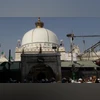 "Ajmer Dargah Sharif claimed as Shiva temple in new religious site dispute")

