CJI Khanna sends report on Justice Varma to President Murmu, PM Modi

The in-house procedure of inquiry has been developed by the Supreme Court to probe into complaints of alleged misbehaviour against judges of the higher judiciary
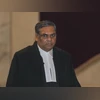
Sanjiv Khanna, Sanjiv, New CJI
Chief Justice of India (CJI) Sanjiv Khanna
Bhavini Mishra New Delhi
5 min read Last Updated : May 09 2025 | 9:12 PM IST
Chief Justice of India (CJI) Sanjiv Khanna on Thursday forwarded to the President and the Prime Minister the in-house report regarding unexplained cash allegedly found at the residence of Justice Yashwant Varma when he (Justice Varma) was with the Delhi High Court.
 
The report was based on an enquiry conducted by a three-judge panel.
 
Justice Varma is now with the Allahabad High Court.
 
The in-house procedure of inquiry has been developed by the Supreme Court to probe complaints of misbehaviour against judges in the higher judiciary. 
 
The resolution for such procedures for action against judges was adopted in 1999 and made public in 2014, said Tushar Agarwal, founder and managing partner, CLAP JURIS.
 
“When a complaint is received against a judge of a high court, the CJI will decide whether the issue requires inquiry. If it is necessary, the judge’s initial response, along with comments of the chief justice of the high court concerned, is taken on record,” he said.  
 
The CJI can then form a three-member committee consisting of two chief justices from other high courts and one high court judge. The committee can provide a recommendation that the misconduct is serious enough to warrant removal or no action is needed. If the recommendation is not for removal, the judge is apprised of the matter. 
 
“If the recommendation is for the judge’s removal, she/he will be asked to resign. If the judge does not, the President and the Prime Minister will be informed of the findings for Parliament to initiate action for removal in accordance with the provisions of the Constitution,” Agarwal said.
 
Tushar Kumar, an advocate practising at the Supreme Court, said the report’s forwarding was the initiation of the next phase in judicial accountability.  
 
“The President is expected to consider it and, in turn, forward it to Parliament for deliberation. This step signifies a critical juncture where the internal process of judicial accountability interacts with the constitutional framework governing a judge’s removal, specifically under Article 124(4) read with Article 218 of the Constitution,” he said. 
 
Any complaint against the chief justice of a high court will be probed by a committee consisting of a Supreme Court judge and two chief justices of other high courts. In the case of a complaint against a Supreme Court judge, the committee will consist of three Supreme Court judges.
 
Impeachment
 
Impeachment is the final step in this framework by which Parliament has the authority to remove a judge from office. The impeachment motion can be introduced by any member of Parliament (MP) in either House, and it must be signed by at least 100 MPs in the Lok Sabha or 50 MPs in the Rajya Sabha. 
 
The motion is then examined by a three-member committee, comprising the CJI, a senior judge of the Supreme Court, and an eminent jurist. This committee conducts an inquiry into the allegations and submits its report. 
 
Should the committee find merit in the allegations, the matter is debated in Parliament, and for the motion to succeed, it must pass by a two-thirds majority in both Houses. If that happens, the President issues the formal order for the removal of the judge. 
 
“Impeachment involves a distinct interaction between the judiciary, the legislature, and the executive, ensuring that judicial accountability is both rigorous and democratic,” Kumar said.
 
Past cases
 
There have been failed impeachment proceedings against Justice V Ramaswami in 1993 and Justice Soumitra Sen in 2011. Despite the detailed provisions for impeachment, no judge has been successfully impeached in India to date, Kumar said. 
 
“The most notable attempt was the case of Justice V Ramaswami, when a motion for impeachment was initiated in 1993 on grounds of alleged corruption. However, despite the inquiry committee’s findings, the motion was defeated in the Lok Sabha, preventing the judge’s removal,” he said.
 
He added Justice Ramaswami continued to serve until his retirement in 1996, marking the first and only instance where an impeachment motion against a judge came close to succeeding but ultimately faltered. 
 
In the case of Justice Sen of the Calcutta High Court, allegations of financial misappropriation were found to be true by the then CJI and a three-judge panel. Since Justice Sen refused to resign, then CJI K G Balakrishnan wrote to then Prime Minister Manmohan Singh, recommending the removal of Justice Sen. However, he resigned when the impeachment proceedings were initiated. The proceedings were dropped eventually. 
 
“The impeachment process in India thus remains an extraordinarily difficult and rare procedure. It is structured in a manner that balances the need for judicial independence with the imperative of accountability. While the in-house procedure allows the judiciary to internally address ethical violations, it is the impeachment process that serves as the ultimate safeguard for removing a judge when there are grave allegations that threaten the integrity of the judiciary,” Kumar said. 
 

One subscription. Two world-class reads.

Already subscribed? Log in

Subscribe to read the full story →
*Subscribe to Business Standard digital and get complimentary access to The New York Times

Smart Quarterly

₹900

3 Months

₹300/Month

SAVE 25%

Smart Essential

₹2,700

1 Year

₹225/Month

SAVE 46%
*Complimentary New York Times access for the 2nd year will be given after 12 months

Super Saver

₹3,900

2 Years

₹162/Month

Subscribe

Renews automatically, cancel anytime

Here’s what’s included in our digital subscription plans

Exclusive premium stories online

  • Over 30 premium stories daily, handpicked by our editors

Complimentary Access to The New York Times

  • News, Games, Cooking, Audio, Wirecutter & The Athletic

Business Standard Epaper

  • Digital replica of our daily newspaper — with options to read, save, and share

Curated Newsletters

  • Insights on markets, finance, politics, tech, and more delivered to your inbox

Market Analysis & Investment Insights

  • In-depth market analysis & insights with access to The Smart Investor

Archives

  • Repository of articles and publications dating back to 1997

Ad-free Reading

  • Uninterrupted reading experience with no advertisements

Seamless Access Across All Devices

  • Access Business Standard across devices — mobile, tablet, or PC, via web or app

Topics :Supreme CourtJudicial serviceSC judges

Next Story


