Home / India News / Delhi's air quality worsens despite better weather; Anand Vihar AQI at 331
Delhi's air quality worsens despite better weather; Anand Vihar AQI at 331
Monitoring stations like Anand Vihar and Wazirpur, record AQI above 300 even as clear skies and moderate winds prevail across the national capital
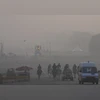
Around 27 stations recorded air quality in the ‘poor’ category, while 10 of the 39 monitoring stations reported AQI levels in the ‘moderate’ range (Photo:PTI)
2 min read Last Updated : Feb 24 2026 | 10:44 AM IST
Delhi’s air quality worsened on Tuesday, with the city’s Air Quality Index (AQI) breaching the 300 mark in certain areas, and entering the very poor range, raising health concerns for residents and vulnerable groups.
According to real-time monitoring data, several key areas in the national capital have recorded alarmingly high pollution figures. Anand Vihar and Wazirpur reported AQI readings of 331 and 310 respectively, while other localities such as Mundka (290), Dwarka Sector-8 (286), Jahangirpuri (274) and Rohini (271) also showed deteriorating conditions.
Around 27 stations recorded air quality in the ‘poor’ category, while 10 of the 39 monitoring stations reported AQI levels in the ‘moderate’ range. Two stations fell in the ‘very poor’ category.
An AQI reading above 300 is categorised as ‘very poor’, posing significant health risks even to healthy individuals, and can trigger respiratory issues, particularly among children, the elderly and those with pre-existing conditions. Levels above 400 are considered hazardous, representing an even greater public health concern.
The deteriorating air quality comes despite recent forecasts from the India Meteorological Department that predicted generally clear skies and rising daytime temperatures, which can sometimes help disperse airborne pollutants. Evening and night-time mist, however, acts to trap emissions close to the surface. Surface winds of 15–25 kilometres per hour on February 25 and 26 are forecast, but experts caution that these speeds are likely insufficient to clear the stagnating pollution quickly. The daily maximum temperature in Delhi is expected to hover between 29 and 31 degrees Celsius, while minimums range from 12.4 to 13.6 degrees Celsius over the next week.
There has been no dramatic change in minimum temperatures over the previous 24 hours, with a predicted rise of 2–3 degrees Celsius thereafter. Maximum temperatures are also likely to remain relatively steady for the next two days before a gradual increase over the subsequent five days.
Ongoing policy debates, including a planned Supreme Court hearing on vehicular emissions and calls for relocation of coal-based units from Delhi-NCR, underline the sustained challenge of tackling air pollution in the capital region.

 "Delhi's air quality worsens despite better weather; Anand Vihar AQI at 331")


