Drop in annual PM2.5, PM10 levels between 2018 and 2023: Environment dept
The Delhi environmental department said there has been a decrease in the annual PM2.5 concentration, dropping from 128 micrograms per cubic metre in 2018 to 106 micrograms per cubic metre in 2023
Rimjhim Singh New Delhi The Delhi Environmental Department notified the National Green Tribunal (NGT) that there has been a decrease in the annual PM2.5 concentration, dropping from 128 micrograms per cubic metre in 2018 to 106 micrograms per cubic metre in 2023.
The report, dated April 22, was submitted to the tribunal and showed that in 2023, Delhi saw a 17 per cent decrease in PM2.5 levels compared to 2018, alongside a 22 per cent reduction in PM10 levels. It showed that the PM10 levels were 216 micrograms per cubic metre in 2023, compared to 277 micrograms per cubic metre in 2018, according to a report in The Times of India (TOI).
The tribunal is hearing a matter related to cities recording higher
Air Quality Index (AQI). NGT in Feb this year had directed 53 cities which record high AQI, to submit reports on contribution by each polluting source in terms of identified pollutants (PM10/PM2.5) as per source apportionment and progressive reduction on account of measures taken.
The environment department, in its report, referenced the source apportionment study carried out by IIT-Kanpur in 2016, which identified major pollution sources in Delhi as secondary particles, biomass burning, vehicles, and soil and road dust, the report stated.
According to an analysis of data submitted by the department, the PM2.5 concentration in the city in 2023 was 2.5 times higher than the national ambient air quality standard (NAAQS) and 21 times higher than the World Health Organisation's (WHO) recommended safe limit. The annual NAAQS for PM2.5 is 40 micrograms per cubic metre, while the WHO's annual safe limit for PM2.5 is five micrograms per cubic metre.
The TOI quoted Dipankar Saha, former head of Central Pollution Control Board's air laboratory, as saying, "Reduction of PM2.5 in terms of mass weight is a good progress and the credit goes to all, including regulators and public in general. However, it would be much better if we are able to demonstrate how much toxic components within mass PM2.5 has been reduced over the years".

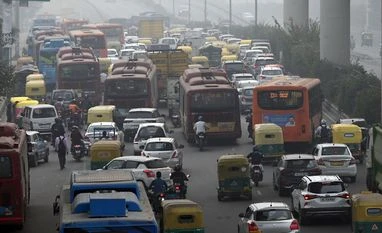 "Drop in annual PM2.5, PM10 levels between 2018 and 2023: Environment dept")

