'Work is work': NCR factory workers forge through heatwave furnace

Some factory owners, in an attempt to counter the heat, have installed fans for each worker, but this measure appears insufficient against the heat radiating from the machines

heatwave furnace
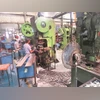
Workers in a tin-roofed plant in Faridabad (Photo: Harsh Kumar)
Harsh Kumar Delhi
3 min read Last Updated : Jun 07 2024 | 12:09 AM IST
“Kaam toh kaam hai” (work is work), said Shivakant Kumar, a factory worker in one of the tin-roofed plants in Faridabad, enduring the intense heat. The heat from the machines was hitting his face, yet he persisted in making plastic decorative items.

“Due to the excessive heat, our production has fallen by 10–15 per cent as work slows down between noon and 4 pm. We’re not putting too much pressure on the workers, as their safety is also important amid rising temperatures,” said Veer Bhan Sharma, president of the Faridabad IMT Industries Association.
 
The capital has endured a six-day stretch of relentless heat, with a peak temperature of 45.6°C (degrees Celsius). This has led to May being identified as the hottest since 2013 by the India Meteorological Department (IMD).
 
Moreover, an examination of minimum temperatures suggests that nights this month have been the warmest since 2016. In the National Capital Region (NCR), Faridabad registered the highest maximum temperature, reaching 47.4°C, with Noida following closely at 47.3°C. Gurugram recorded a temperature of 46.9°C, while Ghaziabad experienced a maximum of 44.7°C.
 
“We’re installing water coolers to reduce the heat, and in some areas, fans, though we’re cautious due to the risk of rust from water. We’re also ensuring that workers have regular access to drinks to keep them hydrated,” said Sharma.
 
A factory worker, who preferred not to be named, said, “Air conditioners (ACs) are for the bosses, but if we workers get cold water, that’s sufficient.”
 
Some factory owners, in an attempt to counter the heat, have installed fans for each worker, but this measure appears insufficient against the heat radiating from the machines.
 
“In factories, excessive heat from machines, coupled with inadequate ventilation due to packed spaces, increases the risk of heatstroke. The additional heat from tin sheds exacerbates the situation, making working conditions for factory workers seem inhumane. Some factory owners, in their quest for cost-cutting, neglect to provide basic requirements,” said Professor Dr M Wali, senior consultant at Sir Ganga Ram Hospital, New Delhi.
 
However, some factory owners claim to provide ‘gamchas’ (cotton towels) to their workers. In certain automotive companies, there is AC ventilation, and in some paint factories, large coolers have been installed.
 
Raj Kumar Karwa, managing director of Sanauto Engineers India, said, “We have installed large coolers to combat the heat. Additionally, during peak heat hours, we’re providing breaks to workers. However, we cannot afford a complete shutdown of work as we need to sustain the business.”
 
“The likelihood of heatstroke among factory workers is higher due to reduced sweating, high humidity, and an elevated body temperature that doesn’t cool easily,” added Dr Wali. He further underscored the importance of factory owners providing regular water to their workers.
 
“Inside factories, temperatures often exceed 50°C, reducing the body’s capacity to function. Factory workers typically have limited rest periods, exacerbating the strain on their bodies. Providing at least a 15-minute break every two hours could be beneficial,” said Mahesh Palawat, vice-president of meteorology and climate change at Skymet, a private weather forecasting company.
 
Palawat said: “We haven’t observed the usual balancing activity due to climate change and urbanisation, with the prevalence of ACs increasing.”  

One subscription. Two world-class reads.

Already subscribed? Log in

Subscribe to read the full story →
*Subscribe to Business Standard digital and get complimentary access to The New York Times

Smart Quarterly

₹900

3 Months

₹300/Month

SAVE 25%

Smart Essential

₹2,700

1 Year

₹225/Month

SAVE 46%
*Complimentary New York Times access for the 2nd year will be given after 12 months

Super Saver

₹3,900

2 Years

₹162/Month

Subscribe

Renews automatically, cancel anytime

Here’s what’s included in our digital subscription plans

Exclusive premium stories online

  • Over 30 premium stories daily, handpicked by our editors

Complimentary Access to The New York Times

  • News, Games, Cooking, Audio, Wirecutter & The Athletic

Business Standard Epaper

  • Digital replica of our daily newspaper — with options to read, save, and share

Curated Newsletters

  • Insights on markets, finance, politics, tech, and more delivered to your inbox

Market Analysis & Investment Insights

  • In-depth market analysis & insights with access to The Smart Investor

Archives

  • Repository of articles and publications dating back to 1997

Ad-free Reading

  • Uninterrupted reading experience with no advertisements

Seamless Access Across All Devices

  • Access Business Standard across devices — mobile, tablet, or PC, via web or app

Topics :NCRDelhi-NCRHeatwaveHeatwave in IndiaIndian factory growth

Next Story