Crop burning emissions rose 75% from 2011-2020, finds IISER study

The study pinpointed Punjab as the highest emitter, with 27 per cent of its cultivated area burned in 2020, followed closely by Madhya Pradesh during the same period
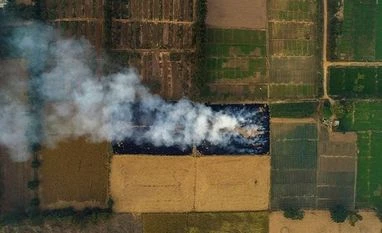
stubble burning
Sanjeeb MukherjeeSohini Das New Delhi/Mumbai
2 min read Last Updated : Sep 27 2023 | 11:56 PM IST
Just before the onset of peak stubble burning season in North India, a new study by the Bhopal-based Indian Institute of Science Education and Research (IISER) reveals a significant 75 per cent increase in greenhouse gas emissions (GHGs) from agricultural residue burning across India from 2011 to 2020.

Punjab emerged as the leading emitter, with 27 per cent of its cultivated area subjected to burning in 2020. It was closely followed by Madhya Pradesh, which accounted for 30 per cent of India's total burned area in the same year.

Although efforts by the Centre and state governments have reduced incidents of crop residue burning, particularly during the kharif harvest season since 2021, the practice has not been completely eradicated. States like Haryana have successfully reduced paddy stubble burning through a mix of financial incentives, subsidised machinery, penal provisions, and awareness campaigns.

For the study, IISER collaborated with the International Maize and Wheat Improvement Center (CIMMYT) and researchers from the University of Michigan. They developed satellite-based technology that offers insights into GHGs emitted from the burning of crop residues in India.

Unlike previous assessments, which relied on agreed estimates of burned crop residues, the current study utilised satellite and other forms of data to focus on actual district-level burned areas and associated emissions from 2011 to 2020.

The study indicated that most emissions occur at the end of the kharif season, followed by the rabi season, largely due to the burning of rice and wheat residues. Rice, wheat, and maize accounted for 97 per cent of India's agricultural burning emissions, with rice being the largest contributor at 55 per cent.

Emissions of carbon monoxide (CO) and greenhouse gases, including carbon dioxide (CO2), methane (CH4), and nitrous oxide (N2O), increased by approximately 75 per cent over the decade, rising from about 19,340 gigagrams per year in 2011 to roughly 33,834 gigagrams per year in 2020.

"While initial policy measures led to a decrease in burning during 2014-2015, a surge occurred in 2016, underscoring the need for more effective and sustainable policies," said Monish Deshpande, Research Scholar, Greenhouse Gas Modelling and Applications Group, IISER Bhopal.

Dr Vijesh V. Krishna, a senior economist at CIMMYT, added, "The detailed mapping of these emissions can serve as the foundation for successful policy interventions to control residue burning."


One subscription. Two world-class reads.

Already subscribed? Log in

Subscribe to read the full story →
*Subscribe to Business Standard digital and get complimentary access to The New York Times

Smart Quarterly

₹900

3 Months

₹300/Month

SAVE 25%

Smart Essential

₹2,700

1 Year

₹225/Month

SAVE 46%
*Complimentary New York Times access for the 2nd year will be given after 12 months

Super Saver

₹3,900

2 Years

₹162/Month

Subscribe

Renews automatically, cancel anytime

Here’s what’s included in our digital subscription plans

Exclusive premium stories online

  • Over 30 premium stories daily, handpicked by our editors

Complimentary Access to The New York Times

  • News, Games, Cooking, Audio, Wirecutter & The Athletic

Business Standard Epaper

  • Digital replica of our daily newspaper — with options to read, save, and share

Curated Newsletters

  • Insights on markets, finance, politics, tech, and more delivered to your inbox

Market Analysis & Investment Insights

  • In-depth market analysis & insights with access to The Smart Investor

Archives

  • Repository of articles and publications dating back to 1997

Ad-free Reading

  • Uninterrupted reading experience with no advertisements

Seamless Access Across All Devices

  • Access Business Standard across devices — mobile, tablet, or PC, via web or app

Topics :Stubble burninggreenhouse gas emissionsAir pollution studyPunjabMadhya Pradesh

Next Story



