Home / India News / Govt's opacity in appointing judges through collegium must go: Ex-SC judge
Govt's opacity in appointing judges through collegium must go: Ex-SC judge
The appointment of judges through the collegium system has often become a flashpoint between the Supreme Court and the Centre, with the mechanism drawing criticism from different quarters.
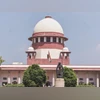
A general view of the Supreme Court in New Delhi. (File photo)
The government is more opaque than the collegium and this opacity of the executive in appointment of judges to higher judiciary has to go, former Supreme Court judge Justice (retd) Madan B Lokur has said.
Lokur, who was part of the collegium during his judgeship days, batted for the existing collegium system of judges appointing judges in constitutional courts but acknowledged that it needed some changes for which discussions were necessary.
The appointment of judges through the collegium system has often become a flashpoint between the Supreme Court and the Centre, with the mechanism drawing criticism from different quarters.
The former judge was responding to a query on non-elevation of worthy high court judges like Justice S Muralidhar, the former Chief Justice of the Orissa High Court, to judgeship in the Supreme Court.
I have repeatedly been saying that the collegium system is the best available method of appointment of judges, but it needs some changes. This needs discussion. One important change is that the opacity of the government has to go. The government is more opaque than the collegium, he told PTI in an interview via e-mail.
The apex court had on October 16, 2015 struck down the ambitious NJAC Act, 2014 which sought to replace the 22-year-old collegium system. Justice Lokur was part of that five-judge constitution bench.
The National Judicial Appointments Commission (NJAC) Act and the Constitution (99th Amendment) Act, 2014 would have accorded a major role to the executive in appointing judges to the higher judiciary.
Justice Lokur was elevated to the Supreme Court as a judge on June 4, 2012 and demitted office on December 30, 2018.
(Only the headline and picture of this report may have been reworked by the Business Standard staff; the rest of the content is auto-generated from a syndicated feed.)

 "Govt's opacity in appointing judges through collegium must go: Ex-SC judge")


