Home / India News / Gyanvapi mosque case: ASI survey report to be given to both sides
Gyanvapi mosque case: ASI survey report to be given to both sides
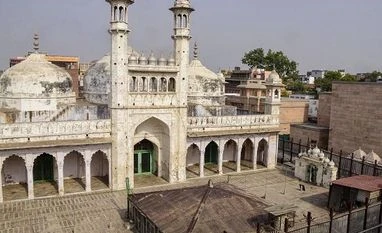
The ASI had conducted a scientific survey of the Gyanvapi premises to determine whether the 17th-century mosque was erected over an existing Hindu temple construction
A court in Varanasi district agreed on Wednesday to share the Archaeological Survey of India's (ASI) scientific report on the Gyanvapi mosque complex with both Hindu and Muslim groups. The parties are required to provide an affidavit for the same.
This development comes after the ASI submitted its findings on the mosque complex to the Varanasi district court in a sealed envelope on December 18. Following this, Advocate Vishnu Shankar Jain, representing the Hindu side, asked the court to make the ASI report public, arguing against its submission in a sealed cover.
The ASI had conducted a scientific survey of the Gyanvapi premises, adjacent to the Kashi Vishwanath temple, to determine whether the 17th-century mosque was erected over an existing Hindu temple construction. This survey was initiated after the Allahabad High Court upheld the Varanasi district court's ruling that the survey was critical to justice and would benefit both parties.
The Gyanvapi committee filed an appeal against the order before the Supreme Court. However, in August of last year, the top court declined to stay the high court's decision on the ASI survey.
ASI survey of Gyanvapi premises
The ASI began a survey of the Gyanvapi mosque complex to ascertain whether the 17th-century mosque was erected on top of an existing Hindu temple. The Allahabad High Court granted permission for the survey, and the ASI team documented, photographed, and recorded a full account of the findings while avoiding damage to the structure.
The Anjuman Intezamia Masjid Committee contested the survey, but the Allahabad High Court dismissed the plea, after which the Supreme Court declined to stay the survey, indicating that it would be completed without excavation or structural damage.
The mosque management committee argued that the survey is "digging into history," violating the Places of Worship Act, and infringing on fraternity and secularism.

 "Gyanvapi mosque case: ASI survey report to be given to both sides")


 Connect with us on WhatsApp