India all set for Aditya-L1 mission: It's time for Isro to bask in the Sun

A spaceship stationed around L1 will have a clear vision of the sun without any occultation or eclipses. This will help in real-time monitoring
chart
Shine Jacob
2 min read Last Updated : Sep 01 2023 | 10:34 PM IST
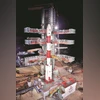
After the success of the Chandrayaan-3 mission by soft-landing on the Moon, India is all set to launch its first space mission to study the Sun, called Aditya-L1, on Saturday by 11.50 am.  The Indian Space Research Organisation (Isro), started a 23-hour 40-minute countdown on Friday at 12:10 hours. Here is a look at the key highlights of the observatory-class solar mission.

$46 million: Amount sanctioned by the Centre in 2019; Actual cost is yet to be revealed

1.5 million kilometers: Distance to be covered, four times farther than the moon. However, this is only 1 per cent of the 151 million kilometer distance between the Earth and the Sun

PSLV XL rockets: Launch vehicle to be used for the mission which will place the spacecraft in the low Earth orbit.  Later, using onboard propulsion, the spacecraft will be launched towards Lagrange point (L1). This will be the 59th mission of PSLV.

Lagrange point (L1): Is a position in space between the Sun and the Earth, where the gravitational forces of the two bodies create an enhanced region of attraction and repulsion. These can be used by spacecraft to reduce fuel consumption needed to remain in position. Lagrange points are named in honor of Italian-French mathematician Josephy-Louis Lagrange.

Four Months: Expected time for India’s mission to reach L1 point

Parker Solar Probe: Nasa’s mission that reached 7.8 million kilometres from the Sun's surface in December 2021, the closest by a human spacecraft to the Sun so far.

Other than Nasa, European Space Agency through Solar Orbiter and countries like China, Germany, Japan and the UK reportedly had so far conducted missions to study the Sun.

SCIENCE OBJECTIVES OF ADITYA L1

Get a deeper understanding of the sun on;

1. Coronal heating and solar wind acceleration

2. Coupling and dynamics of the solar atmosphere

3. Solar wind distribution and temperature anisotropy

4. Initiation of Coronal Mass ejection (CME), flares and near-Earth space weather


One subscription. Two world-class reads.

Already subscribed? Log in

Subscribe to read the full story →
*Subscribe to Business Standard digital and get complimentary access to The New York Times

Smart Quarterly

₹900

3 Months

₹300/Month

SAVE 25%

Smart Essential

₹2,700

1 Year

₹225/Month

SAVE 46%
*Complimentary New York Times access for the 2nd year will be given after 12 months

Super Saver

₹3,900

2 Years

₹162/Month

Subscribe

Renews automatically, cancel anytime

Here’s what’s included in our digital subscription plans

Exclusive premium stories online

  • Over 30 premium stories daily, handpicked by our editors

Complimentary Access to The New York Times

  • News, Games, Cooking, Audio, Wirecutter & The Athletic

Business Standard Epaper

  • Digital replica of our daily newspaper — with options to read, save, and share

Curated Newsletters

  • Insights on markets, finance, politics, tech, and more delivered to your inbox

Market Analysis & Investment Insights

  • In-depth market analysis & insights with access to The Smart Investor

Archives

  • Repository of articles and publications dating back to 1997

Ad-free Reading

  • Uninterrupted reading experience with no advertisements

Seamless Access Across All Devices

  • Access Business Standard across devices — mobile, tablet, or PC, via web or app

Topics :Isro projectsisro launchISRO satellite

Next Story


