
Isro to launch ESA's Proba-3 mission satellites from Sriharikota today
The Proba-3 (Project for Onboard Autonomy) consists of a double-satellite in which two spacecraft would fly together as one
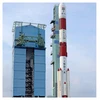 "Isro to launch ESA's Proba-3 mission satellites from Sriharikota today")
Explore Business Standard

Associate Sponsors
Co-sponsor
The Proba-3 (Project for Onboard Autonomy) consists of a double-satellite in which two spacecraft would fly together as one
The countdown for Isro's dedicated commercial mission--Proba-3 spacecraft of the European Space Agency (ESA) marking a 'proud milestone in India's space journey' is progressing for the launch scheduled later on Wednesday, the space agency said.
NewSpace India Ltd, the commercial arm of Isro which would launch client vehicles, has secured the order from ESA for its latest launch, which would be a 'technology demonstration' mission. The significant objective of the mission is the first-of-its-kind formation flying in precision and to study the Sun's outer atmosphere.
"Liftoff Day is Here. PSLV-C59, showcasing the proven expertise of Isro, is ready to deliver ESA's PROBA-3 satellites into orbit. This mission, powered by NSIL with Isro's engineering excellence, reflects the strength of international collaboration," Isro said on Wednesday.
An Isro official said that the 25 hour countdown that started at 3.08 pm on Tuesday is progressing for the launch scheduled from the first launch pad at 4.08 pm on Wednesday at this spaceport here.
"A proud milestone in India's space journey and a shining example of global partnerships," the space agency said in an update about its latest mission. Indian Navy Day 2024: History, theme significance, and celebrations
The Proba-3 (Project for Onboard Autonomy) consists of a double-satellite in which two spacecraft would fly together as one, maintaining precise formation down to a single millimetre to study the sun's outer atmosphere.
The mission objective is to demonstrate precise formation flying and the two spacecraft - 'Coronagraph' and 'Occulter' would be launched together in a stacked configuration, Isro said.
The Bengaluru-headquartered space agency is using its proven Polar Satellite Launch Vehicle (PSLV) for the mission.
The PSLV is on its 61st flight and the 26th of the XL variant. After travelling for about 18 minutes, it is slated to place the 550kg Proba-3 satellites into a desired orbit.
After reaching the initial orbital conditions, the two satellites would fly 150 metres apart (as one large satellite structure) in tandem so that the 'Occulter' spacecraft would block out the solar disk of the sun enabling Coronagraph to study the corona of the Sun or the surrounding atmosphere, for scientific observation.
"The corona, much hotter than the Sun itself, is where space weather originates and a topic of widespread scientific and practical interest," the European Space Agency said.
"The two satellites would fly together as a 'large rigid structure' in space to prove formation flying technologies and rendezvous experiments," the ESA added..
After lifting-off at the scheduled time of 4.08 pm on Wednesday, the satellites are expected to reach High Earth Orbit and would have a 19.7 hour orbital period with 60,530 km of apogee (farthest point from earth) and 600 km perigee (closest point to earth).
First Published: Dec 04 2024 | 9:32 AM IST

