
Lockdown in 2020 prevented 27 MT of Himalayan snowmelt: Research
This reduction in radiative forcing may have prevented 27 MT in ice and snow melt
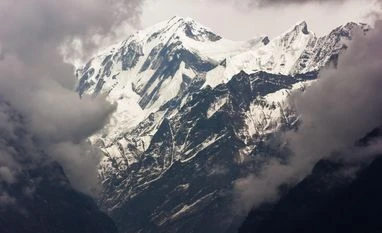 "Lockdown in 2020 prevented 27 MT of Himalayan snowmelt: Research")
Explore Business Standard
This reduction in radiative forcing may have prevented 27 MT in ice and snow melt
As many as 27 metric tonnes of ice and snow melt in the Himalayas had been prevented by the Indian national lockdown, in place from March 25, 2020, to May 31, 2020, according to a new study.
Diminished anthropogenic pollutant emissions during the 2020 Covid-19 lockdowns reduced snowmelt in the Himalayas, the study published in Proceedings of the National Academy of Sciences (PNAS) Nexus said.
Liqiang Zhang from Beijing Normal University, China, and colleagues explored how the sudden, dramatic reduction in particulate pollution in the region affected snow and ice melt, using multiple satellite data as well as a coupled atmosphere-chemistry-snow model.
The authors estimate that the reduced anthropogenic pollutant emissions during the Indian lockdown was responsible for 71.6 per cent of the reduction in radiative forcing on snow in April 2020 compared to the same period in 2019.
This reduction in radiative forcing may have prevented 27 MT in ice and snow melt. The results emphasised the power of reducing anthropogenic pollutant emissions when combating snow and ice melt, according to the authors.
Snow and ice on the Tibetan plateau act as a water source for over 20 per cent of the global population. However, ice and snow in the Himalayas have been melting at an accelerating rate in recent decades.
While much of this melting is attributable to climate change, air pollution also plays a role, because dark particles of dust and soot that fall on frozen surfaces absorb solar energy and melt the nearby snow and ice, the authors said.
(Only the headline and picture of this report may have been reworked by the Business Standard staff; the rest of the content is auto-generated from a syndicated feed.)
First Published: Jun 28 2023 | 7:03 PM IST


