The Mizoram Assembly on Wednesday adopted a resolution opposing the Centre's decision to fence the India-Myanmar border and scrap the Free Movement Regime (FMR) with the neighbouring country.
The resolution, moved by Home Minister K Sapdanga, urged the Centre to reconsider its decision.
It urged the Union government to instead take steps to ensure that Zo ethnic people, "who have been divided in different countries, are unified under one administrative unit".
While moving the resolution, Sapdanga said the Zo ethnic people, who have inhabited Mizoram and the Chin hills of Myanmar for centuries and once lived together under their own administration, have been geographically divided when the British occupied the region.
He said the British demarcated the India-Myanmar border and divided the Zo ethnic people's land into two countries.
"The Zo ethnic people can't accept the India-Myanmar border, which has been imposed on them by the British. They have been dreaming of reunification under one administrative unit someday," the home minister said.
He said fencing the India-Myanmar border or scrapping the FMR, which will mandate the approval of the imposed boundary, is unacceptable for the Zo ethnic people.
Although the Mizoram government is yet to receive official intimation about the Centre's plan, it is evident from media reports and statements of Union ministers that the Centre is planning to fence the India-Myanmar border and suspend the existing FMR with Myanmar, he said.
Union Home Minister Amit Shah had on February 6 announced that the entire India-Myanmar border would be fenced. Two days later, on February 8, he said that the Centre has decided to scrap the India-Myanmar Free Movement Regime (FMR) to maintain the country's internal security and demographic structure of the northeastern states.
Sapdanga alleged that the recent decisions were motivated mainly by the demands of the Manipur government.
The idea of fencing the India-Myanmar border and lifting the FMR, as reported in a section of media, stemmed out of some reasons, including national security, smuggling of contraband items, illegal immigration and movement of insurgents, he said.
Sapdanga said national security "can't be an excuse" for fencing the India-Myanmar border and lifting the FMR.
"If the Centre is so concerned about national security, it should also fence all the international borders that the country shares with neighbouring countries," he said.
It should also abolish the mechanism India has with Nepal and Bhutan, under which people of these countries can visit each other's territory without a visa, he said.
He said that even during the peak period of insurgency in the northeastern states, the FMR with Myanmar was never questioned.
He said that fencing the international border and lifting the FMR will severely affect people living along the border on either side.
"I urge the Centre to consider the hardships that will be faced by the Zo ethnic people if the India-Myanmar border is fenced and the FMR is scrapped," Sapdanga said.
After a prolonged discussion, the assembly unanimously adopted the resolution. Chief Minister Lalduhoma and Leader of the Opposition, Lalchhandama Ralte of the Mizo National Front (MNF), were present.
Four Indian states -- Mizoram, Manipur, Nagaland and Arunachal Pradesh -- share a 1,643-km-long international border with Myanmar.
Mizoram shares a 510-km-long border with Myanmar's Chin state and the Mizos share ethnic ties with the Chin people.
Mizoram's civil society organisations and student bodies also strongly opposed the Centre's decision to fence the border and lift the FMR.

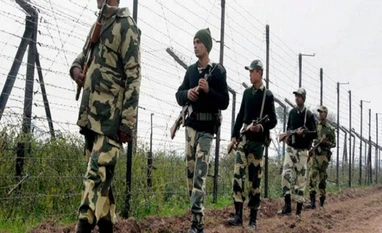 "Mizoram adopts resolution against Centre's move to fence Myanmar border")


