Narendra Modi govt's road to 2024: Reformist agenda or welfarism?

The BJP has shown political fleet-footedness throughout its nine years in power at the Centre
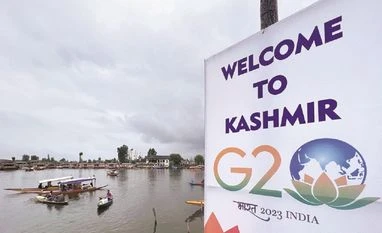
G20 Kashmir
Archis Mohan New Delhi
4 min read Last Updated : May 25 2023 | 10:18 PM IST
The Narendra Modi government marks its ninth anniversary on Friday, acutely aware that 10 months from now, it will face a united opposition that will try to convince the electorate that the PM reneged on his promise of delivering "acche din", or better days. The challenges confronting Modi and his party are similar to 2019, which they won within five months of losing three key Hindi heartland states.

"The 2004 'India Shining' electoral disaster taught the BJP's current crop of leadership to be ideologically agile, evident in the February 2019 vote on accounts and even now," a senior BJP leader, currently in charge of a poll-bound state, said in a conversation here on Thursday. In April, the Centre formed a committee to study whether the new pension scheme warranted any changes after losing the Himachal Pradesh assembly polls in December 2022. A central plank of the Congress was restoring the 'old pension scheme'.

In February 2019, less than two months after the BJP lost the Chhattisgarh, Madhya Pradesh and Rajasthan assembly polls to the Congress over agrarian distress, Union Minister Piyush Goyal stood up in the Lok Sabha to present an interim budget. Goyal stretched the norm that an elected government should only table five full budgets. He announced key decisions, including the PM Kisan Nidhi scheme, a Rs 6,000 annual allowance as a palliative to small farmers, and an income tax break for the middle class.

In early 2018, while handing over the Congress presidency to Rahul Gandhi, Sonia Gandhi said: "I am confident that the BJP's Acche Din will actually turn into Shining India, which is what brought us victory (in 2004 polls)." Modi's charisma, the government's outreach to the farmers and middle class through the interim budget and the nationalistic fervour in the wake of the Pulwama-Balakot episode made Modi the first PM since 1971 to return to power with a majority.
   
The BJP has shown political fleet-footedness throughout its nine years in power at the Centre. Modi withdrew the land bill in 2015 after criticism that his was a 'suit boot ki sarkar' and embraced 'garib kalyan', the welfare of the poor, as the leitmotif of his government.

By May 2016, he launched the Ujjwala Yojana in Uttar Pradesh, where the polls were due a year later and pursued building toilets. When Rahul Gandhi promised a farm loan waiver to UP's farmers, the BJP shed its aversion to the idea, promising and delivering it within weeks of Yogi Adityanath's oath. November 8, 2016, demonetisation came precisely three months before the first phase of polling in UP, with people convinced that it hurt the wealthy, contributing to the perception that Modi has delivered on his commitment to weed out corruption.

The Modi government made its own some of the schemes it inherited from the UPA, such as the Jan Dhan Yojana, the Aadhaar-based direct benefit transfer and housing scheme, amending the goods and services tax (GST) regulations frequently in the run-up to the December 2017 Gujarat assembly polls after businesses complained. The BJP achieved its core agenda of repealing Article 370 and constructing a Ram temple in Ayodhya within months of its 2019 victory, resorted to astute social engineering and also crafted a 'labharthi', a beneficiary class, which helped it overcome setbacks like protests over the anti-Citizenship Amendment Act (CAA) and farm laws to win UP again in March 2022.

The new Parliament building, the launch of the Gaganyaan, India hosting the G20 summit in September and the inauguration of the Ram temple in January should add to the PM's charisma. However, the BJP looked tired, despite the PM's popularity, in the Karnataka assembly polls. The marginalised and the poor, which have taken to vote for the BJP in northern India, shifted to the Congress, as did women in Karnataka.

As the debate over 'revari', or freebies, and its Karnataka loss, show, the BJP is trying to come up with new ideas that might help Modi match the record of Jawaharlal Nehru - leading his party to win in three successive general elections. The BJP's challenge is whether it can again deflate a Congress, which now looks reinvigorated and has adopted sharper messaging around its "guarantees", and several regional parties, especially in Bihar, Maharashtra and West Bengal. The jury’s out on whether it will return to the reformist agenda of development and economic growth it promised in 2014 or stick with its model of welfarism.

One subscription. Two world-class reads.

Already subscribed? Log in

Subscribe to read the full story →
*Subscribe to Business Standard digital and get complimentary access to The New York Times

Smart Quarterly

₹900

3 Months

₹300/Month

SAVE 25%

Smart Essential

₹2,700

1 Year

₹225/Month

SAVE 46%
*Complimentary New York Times access for the 2nd year will be given after 12 months

Super Saver

₹3,900

2 Years

₹162/Month

Subscribe

Renews automatically, cancel anytime

Here’s what’s included in our digital subscription plans

Exclusive premium stories online

  • Over 30 premium stories daily, handpicked by our editors

Complimentary Access to The New York Times

  • News, Games, Cooking, Audio, Wirecutter & The Athletic

Business Standard Epaper

  • Digital replica of our daily newspaper — with options to read, save, and share

Curated Newsletters

  • Insights on markets, finance, politics, tech, and more delivered to your inbox

Market Analysis & Investment Insights

  • In-depth market analysis & insights with access to The Smart Investor

Archives

  • Repository of articles and publications dating back to 1997

Ad-free Reading

  • Uninterrupted reading experience with no advertisements

Seamless Access Across All Devices

  • Access Business Standard across devices — mobile, tablet, or PC, via web or app

Topics :Narendra ModiModi govtNDA

Next Story


