Home / India News / PSLV suffers stage-3 failure in Isro's first 2026 launch: What went wrong?
PSLV suffers stage-3 failure in Isro's first 2026 launch: What went wrong?
PSLV-C62's third-stage malfunction derailed India's first 2026 space mission, with DRDO's Anvesha and multiple co-passenger satellites now presumed lost
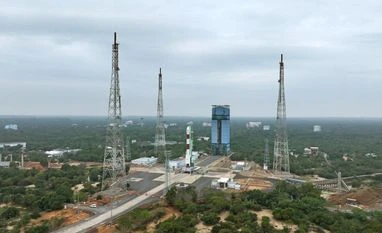
The failure has likely resulted in the loss of DRDO’s strategic hyperspectral satellite Anvesha | Image: X@isro
India’s first launch of 2026 ended in failure on Monday after the PSLV-C62 rocket veered off course due to a critical third-stage malfunction. The mission began flawlessly with a 10:18 am IST liftoff from Sriharikota, but eight minutes later, flight computers flagged a “performance disturbance” in the PS3 segment, triggering an immediate mission review by Isro.
Isro Chairman V Narayanan, addressing a sombre press briefing, confirmed the anomaly. “The initial phases were nominal, but the third stage did not produce the required thrust due to an unexpected drop in chamber pressure,” he said. “The vehicle deviated significantly from its intended trajectory, and the satellites could not be placed in orbit.”
The failure has likely resulted in the loss of DRDO’s strategic hyperspectral satellite Anvesha and 15 accompanying payloads, dealing a second consecutive blow to the PSLV family and raising pointed questions about the health of the launcher’s solid-fuel systems.
What went wrong with PSLV-C62?
Preliminary data indicates that the mission faltered when the PS3 engine, which is responsible for delivering the decisive boost to inject satellites into orbit, suffered a sudden pressure drop. The under-performance left the rocket without enough thrust to stay on track, leading to a trajectory drift that made orbital insertion impossible.
Isro has begun a detailed analysis of telemetry and propulsion data to pinpoint the failure mode, particularly whether the anomaly is linked to the same class of issues suspected in last year’s PSLV-C61 mission.
The incident marks the PSLV’s second failure in eight months, an unusual development for a vehicle long regarded as Isro’s most reliable launcher, with a success rate of about 94 per cent over 63 flights. The absence of a public report on the C61 failure has already drawn scrutiny, and the repeat third-stage anomaly is likely to intensify debates about transparency and quality assurance within India’s launch programme.
Beyond the immediate mission loss, the failure could have implications for India’s commercial launch plans. PSLV is central to NSIL-operated rideshare missions, and repeated anomalies may affect customer confidence at a time when Isro has set ambitious targets for satellite deployments, NavIC expansion and preparations for the Gaganyaan human spaceflight programme in 2026.
What was PSLV-C62 carrying?
PSLV-C62 was the vehicle’s 64th flight and the fifth mission of the two-strap-on DL configuration. It carried a mix of Indian and international technology demonstrators, including AI-enabled in-orbit processors, Internet of Things communication payloads, radiation sensors and agricultural data systems.
Its primary satellite, DRDO’s EOS-N1 (Anvesha), was designed for hyperspectral imaging to support advanced surveillance and strategic monitoring. Also onboard was AayulSAT, built by Bengaluru startup OrbitAID Aerospace — India’s first in-orbit satellite refuelling demonstrator aimed at testing propellant-transfer technologies crucial for future satellite servicing.
Another payload was the European KID re-entry capsule, developed in collaboration with a Spanish startup, which was to separate from the fourth stage and splash down in the South Pacific to validate controlled atmospheric re-entry systems.
The mission also included multiple CubeSats from Indian universities and startups, including Dhruva Space’s CGUSAT, aimed at research and commercial applications across communications, IoT and Earth observation.
The launch followed Isro’s internal review of 2025’s PSLV-C61 anomaly, after which a failure analysis committee recommended corrective measures before returning the vehicle to service — measures that will now undergo renewed scrutiny.

 "PSLV suffers stage-3 failure in Isro's first 2026 launch: What went wrong?")


 Connect with us on WhatsApp