
SC's haste on same-sex marriage not appropriate, may lead to disputes: VHP
"None of the civil codes prevailing in India gives permission for this (same-sex marriage). Does the Supreme Court want to make a change in these?"
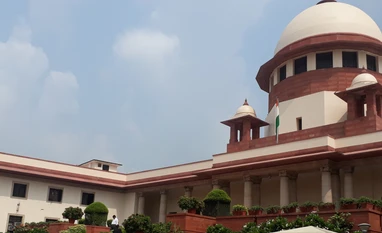 "SC's haste on same-sex marriage not appropriate, may lead to disputes: VHP")
Explore Business Standard
"None of the civil codes prevailing in India gives permission for this (same-sex marriage). Does the Supreme Court want to make a change in these?"
The Vishva Hindu Parishad on Saturday said the "haste" with which the Supreme Court is disposing of the petitions for legal recognition to same-sex marriages is not appropriate and it should have sought the opinion of religious leaders and experts from diverse fields.
VHP Joint General Secretary Surendra Jain expressed apprehension the top court's actions could lead to "new disputes".
A five-judge Constitution bench headed by Chief Justice D Y Chandrachud is hearing a batch of pleas seeking legal sanction for same-sex marriage. It began hearing the matter on Tuesday and the arguments remained inconclusive on the third consecutive day on Thursday. The arguments will resume on April 24.
On Thursday, the top court said it may be redefining the "evolving notion of marriage" as the next step after decriminalising consensual homosexual relationship, which implicitly recognised that same-sex people could live in a stable marriage-like relationship.
"The haste with which the honourable Supreme Court is disposing off the petitions for recognition of same-sex marriage is not appropriate in any way. This will give rise to new disputes and will also prove to be dangerous for the culture of India," Jain said.
"Hence, before proceeding ahead on this subject, the honourable Supreme Court should have taken the opinion of the religious leaders, people from the field of medicine, social scientists and academicians by forming a committee," he told reporters here.
Jain said the subject of marriage is governed by different civil codes.
"None of the civil codes prevailing in India gives permission for this (same-sex marriage). Does the Supreme Court want to make a change in these?" he said.
Ram Narayan Dwivedi of Kashi Vidvat Parishad, Govind Sharma of Ganga Mahasabha and Mahant Balak Das of Dharma Parishad also spoke at the press conference.
During Thursday's hearing, the Supreme Court did not agree to the contention that unlike heterosexuals, same-sex couples cannot take proper care of their children.
Referring to its 2018 judgment that decriminalised consensual gay sex, the court said it led to a situation where two consenting homosexual adults can live in a marriage-like relationship and the next step could be to validate their relationship as marriage.
"Therefore, by decriminalising homosexuality we have not just recognised the relationship between consenting adults of the same gender, we have also recognised implicitly the fact that the people who are of same sex could be in a stable relationship, it said.
(Only the headline and picture of this report may have been reworked by the Business Standard staff; the rest of the content is auto-generated from a syndicated feed.)
First Published: Apr 22 2023 | 10:46 PM IST


