
Terrorists don't play by rules, so country's response can't have rules: EAM
Jaishankar also said that the country's foreign policy has undergone a change since 2014 and it is the way terrorism is dealt with
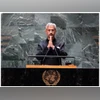 "Terrorists don't play by rules, so country's response can't have rules: EAM")
WebinarsNew
Deep DiveNew
Explore Business Standard
Jaishankar also said that the country's foreign policy has undergone a change since 2014 and it is the way terrorism is dealt with
External Affairs Minister S Jaishankar has said that India was committed to respond to any act of terrorism perpetrated from across the borders, and asserted that since terrorists do not play by rules, there cannot be any rules in the country's answer to them.
Attacking the United Progressive Alliance (UPA) dispensation over its response to the 26/11 Mumbai terror attacks in 2008, he said that after a lot of deliberation at the government level, nothing fruitful came out at that time as it was felt that the cost of attacking Pakistan was more than not attacking it.
Interacting with youth on Friday at an event titled 'Why Bharat Matters: Opportunity for youth and participation in global scenario' here, he asked that if a similar attack happens now and one does not react to it, how can the next such attacks be prevented.
Jaishankar also said that the country's foreign policy has undergone a change since 2014 and it is the way terrorism is dealt with.
When asked about countries with which India finds it challenging to maintain relationships, Jaishankar said India should question whether it should maintain any relationship with certain countries.
"Well, one is just next to us. Let us be honest, the one country that is very, very difficult is Pakistan, and for that, we should only introspect why. One reason for this is us," he said.
He added that had India been clear from the start that Pakistan was indulging in terrorism, which India should not tolerate under any circumstances, the country would have had a vastly different policy.
"In 2014, Modi ji came. But this problem (terrorism) did not start in 2014. It did not begin with the Mumbai attack. It happened in 1947. In 1947, the first people (invaders) came to Kashmir, they attacked Kashmir. It was an act of terrorism. They were burning down villages and towns. They were killing people. These people were tribals from Pakistan's North-West Frontier Province. The Pakistan army backed them. We sent the army, and the integration of Kashmir took place," Jaishankar said.
"While the Indian army was taking action, we stopped in the middle and went to the UN, mentioning that the attack was by tribal invaders instead of terrorism, as if it was a legitimate force," he said.
He added that in the 1965 Indo-Pak war, Pakistan first sent infiltrators to sabotage.
"We have to be very clear in our minds about terrorism; under no circumstances is terrorism acceptable from any neighbour or from anyone who uses terrorism to force you to sit at the negotiating table. This should never be accepted," he said.
He mentioned that sometimes he is asked about the continuity in India's foreign policy and he responds clearly that there is 50 per cent continuity and 50 per cent change.
"One change is regarding terrorism. After the 26/11 Mumbai attack, there was not a single person in the country who felt that we should not have responded to the attack. Everybody in the country felt it. There is an account of that time. The NSA had written that this minister looked at it, that minister looked at it. Everybody deliberated, a lot of analysis took place, and then it was decided that the cost of attacking Pakistan is more than not attacking Pakistan. So after a lot of deliberation, nothing fruitful came out," he said.
He emphasized that if something like Mumbai happens and you do not react to it, how can you prevent the next one from happening? "They (terrorists) should not feel that since they are across the border, no one can touch them. Terrorists do not play by any rules. The response to terrorists cannot have any rules," he said.
(Only the headline and picture of this report may have been reworked by the Business Standard staff; the rest of the content is auto-generated from a syndicated feed.)
First Published: Apr 13 2024 | 12:09 PM IST


 Connect with us on WhatsApp