While large projects in India are required by law to undergo an Environmental Impacts Assessment, the Silkyara Tunnel in Uttarakhand was exempt as it is divided into segments smaller than 100 km each
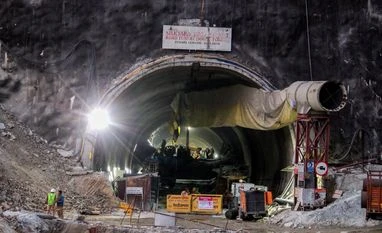
Uttarakhand tunnel collapse: The tunnel is part of the Chardham project, a nearly 900 kilometer connectivity plan. (Photo: PTI)
India’s government ignored a recommendation that it conduct a formal environmental risk study on a highway tunnel project that collapsed and trapped 41 workers.
While large projects in India are required by law to undergo an Environmental Impacts Assessment, the Silkyara Tunnel in Uttarakhand was exempt as it is divided into segments smaller than 100 km each. So the Supreme Court in 2019 asked an expert panel to suggest risk mitigation options.
“We wrote to the government asking them to conduct a rapid EIA” but the study wasn’t submitted, Ravi Chopra, the panel’s chairman, said by phone on Tuesday. Typically, planned large infrastructure in India undergoes an Environmental Impacts Assessment, or EIA, which examines its projected impacts on local biodiversity and geology. It is meant to help project designers weigh economic benefits against the environmental damages involved in any new construction.
Spokespeople for the Ministry of Environment, Forest and Climate Change and the Ministry for Road Transport and Highways did not reply to a request for comment.
The tunnel is part of the Chardham project, a nearly 900 kilometer connectivity plan announced by Prime Minister Narendra Modi in 2016. The $1.4 billion (120 billion rupee) project aims to boost pilgrim tourism across four religious sites in the region, bolster military logistics and improve connectivity for residents of the state.
The committee identified numerous problems. Its members warned that the nature of the soil, consisting in part of crushed rocks and limestone would exacerbate the existing risk of landslides and flash floods in the state.
“Rainwater can dissolve limestone,” Chopra said. “Naturally, the probability of a roof collapsing is high and you can’t say you are surprised.”

 "U'khand tunnel collapse: 'You can't act surprised,' says environment expert")

