Fixing oilseeds MSP with oil content could trim India's bulging import bill

The CACP said that the Indian Council of Agricultural Research has developed several high oil content varieties and management practices to boost oil yield in mustard and safflower

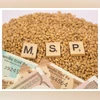
MSP
(Photo: Shutterstock.com)
Sanjeeb Mukherjee New Delhi
5 min read Last Updated : Oct 14 2025 | 8:28 PM IST
Earlier this month, the Commission for Agricultural Costs and Prices (CACP), the Centre’s main body that fixes the Minimum Support Price (MSP), in one of its non-price recommendations for the 2026-27 rabi marketing season, suggested linking the MSP of oilseeds like rapeseed and safflower to their oil content. The move aims to encourage production of oilseeds with higher oil content and ensure better returns for farmers.
 
The CACP noted that the Indian Council of Agricultural Research (ICAR) has developed several high oil content varieties and management practices to boost oil yield in mustard and safflower.
 
However, farmers currently have little incentive to adopt these varieties or practices unless they receive a premium for higher oil content. Hence, it is essential to reward farmers who produce oilseeds with better oil recovery.
 
“Therefore, the Commission recommends linking the MSP of mustard and safflower seeds with oil content with a benchmark oil content of 34 percent in mustard and 28 percent in safflower,” the CACP said.
 
It added that for every incremental increase of 0.25 percentage points in oil content beyond these levels (34 per cent for mustard and 28 per cent for safflower), farmers should receive an additional incentive to promote the cultivation of high oil content varieties and expand the area under these crops.
 
Though CACP’s non-price recommendations are largely advisory and not binding on the government, the proposal carries merit and has found support across the edible oils industry.
 
“Presently, there is no quality differential in MSP for oilseed growers. National Agricultural Cooperative Marketing Federation of India Ltd or (NAFED), when it intervenes in the market, buys oilseeds at Fair and Average Quality (FAQ), but that is for limited quantities. The bulk of the oilseeds are sold in the mandis without any particular oil content. The CACP’s recommendations are welcome in that respect,” said BV Mehta, executive director of the Solvent Extractors Association of India (SEA), a premier body of oilseed processors and extractors.
 
Citing the example of soybeans, Mehta said that a few years ago there was a move by the processing industry to incentivise those farmers whose crop had less than 0.5 per cent sand and silica content. However, due to pressure from various quarters, the initiative failed to take off. As a result, even farmers with cleaner produce began mixing impurities since there was no incentive left.
 
“Clearly, if MSP is linked to oil content it would encourage farmers to grow premium varieties of oilseed that would give them a higher price,” Mehta said.
 
He added that if implemented, the recommendations could also help reduce India’s growing edible oil imports by motivating farmers to produce more high oil-bearing oilseeds domestically.
 
However, some experts cautioned that implementing such a mechanism could be challenging.
 
Edible oil imports
 
India imported around 16 million tonnes of edible oils in the 2023-24 marketing year (November to October), worth about Rs 132,000 crore.
 
Although imports have slowed slightly since the Covid years of 2021-22, when they hit a record Rs 157,000 crore, they remain significantly higher than earlier levels.
 
According to a policy brief by the Indian Council of Agricultural Research’s (ICAR) National Institute of Agricultural Economics and Policy Research (NIAP), over the past two decades, the area under oilseeds has risen from 22.8 million hectares in 2000-01 to 30.2 million hectares in 2022-23.
 
Average yield has increased from 810 kg per hectare to 1,309 kg per hectare, but it still lags the global average of 1,960 kg per hectare by around 33 per cent.
 
“In India, the primary constraints to oilseed production include their cultivation in arid and semi-arid regions with limited irrigation facilities, susceptibility to insect pests and diseases, lack of incentives, and an unpredictable import policy,” the policy brief said.
 
Mustard with high oil content
 
Among mustard varieties with higher-than-average oil content, one that has gained traction in recent years is ‘Giriraj’, also known as DRMRIJ-31.
 
Released in 2013-14, Giriraj has been widely adopted in Haryana, Jammu and Kashmir, Punjab, and parts of Rajasthan, Bihar, Madhya Pradesh, and Uttar Pradesh. Its popularity stems from several traits — bold seeds, higher yield (2,225–2,750 kg per hectare), and oil content of 39–42.6 per cent.
 
Existing mustard varieties, in comparison, yield 1,750–2,400 kg per hectare and have an average oil content of 37–43 per cent.
 
Giriraj can tolerate cold and heat stress during flowering and grain filling and is resistant to diseases such as Alternaria leaf spot, powdery mildew, and white rust. The oil, with low erucic acid content, is of superior quality and healthier for consumption, while the resulting oilcake serves as an excellent feed for livestock, the ICAR paper noted.
 
Further, the ICAR paper showed that over the nine-year period from 2015-16 to 2023-24, Giriraj consistently performed better than other popular varieties, with an estimated average yield about 300 kg per hectare higher.
 
“Compared to the national average, Giriraj’s yield was approximately 700 kg per hectare higher,” the ICAR paper said.
 
It added that based on breeder seed supply data and farm surveys, Giriraj now covers around 15 per cent of the total mustard area (2023-24). Projections suggest its adoption could rise to 17 per cent by 2030 under business-as-usual (BAU) conditions.
 
“With significant promotional efforts, it can occupy 20 per cent of the total mustard area,” the ICAR paper said. It is here that CACP’s recommendations could prove useful in encouraging farmers to adopt high oil content seeds and help curb India’s bulging edible oil import bill.

One subscription. Two world-class reads.

Already subscribed? Log in

Subscribe to read the full story →
*Subscribe to Business Standard digital and get complimentary access to The New York Times

Smart Quarterly

₹900

3 Months

₹300/Month

SAVE 25%

Smart Essential

₹2,700

1 Year

₹225/Month

SAVE 46%
*Complimentary New York Times access for the 2nd year will be given after 12 months

Super Saver

₹3,900

2 Years

₹162/Month

Subscribe

Renews automatically, cancel anytime

Here’s what’s included in our digital subscription plans

Exclusive premium stories online

  • Over 30 premium stories daily, handpicked by our editors

Complimentary Access to The New York Times

  • News, Games, Cooking, Audio, Wirecutter & The Athletic

Business Standard Epaper

  • Digital replica of our daily newspaper — with options to read, save, and share

Curated Newsletters

  • Insights on markets, finance, politics, tech, and more delivered to your inbox

Market Analysis & Investment Insights

  • In-depth market analysis & insights with access to The Smart Investor

Archives

  • Repository of articles and publications dating back to 1997

Ad-free Reading

  • Uninterrupted reading experience with no advertisements

Seamless Access Across All Devices

  • Access Business Standard across devices — mobile, tablet, or PC, via web or app

Topics :AgricultureeconomyICAR

Next Story