Home / Industry / Agriculture / UP to procure 6 Mt paddy worth ₹14,000 crore in 2025-26 Kharif season
UP to procure 6 Mt paddy worth ₹14,000 crore in 2025-26 Kharif season
While procurement of paddy began in the western UP districts on October 1, the process will commence on November 1 in the eastern UP region
premium
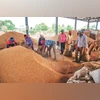
UP to procure 6M tonnes of paddy at raised MSP; farmers to register via OTP, receive DBT within 48 hrs, ensuring transparency and support for smallholders.
2 min read Last Updated : Oct 23 2025 | 5:32 PM IST
The Uttar Pradesh government is planning to purchase 6 million tonnes (Mt) of paddy in the current Kharif marketing season 2025–26 worth around ₹14,000 crore.
For the current season, the minimum support price (MSP) for paddy has been hiked to ₹2,369 per quintal (100 kg) for the common variety and ₹2,389 per quintal for Grade A, compared to ₹2,300 per quintal and ₹2,320 per quintal respectively last year.
While procurement of paddy began in the western UP districts on October 1, the process will commence on November 1 in the eastern UP region.
“The paddy procurement under the MSP mechanism would continue till January 31 and February 28, 2026 in the western UP and eastern UP districts respectively,” a senior official said.
Meanwhile, the government has introduced an OTP-based single registration system to enable farmers to register seamlessly using their mobile phones.
The registration of farmers is mandatory for participation in the MSP-based procurement process, which also entails the Direct Benefit Transfer (DBT) of cash to Aadhaar-linked bank accounts within 48 hours.
To ensure transparency and eliminate middlemen, procurement will only be done through biometric verification using e-POP (Electronic Point of Purchase) devices.
Moreover, the Yogi government gives priority to small farmers so that they do not resort to distress sales or face impediments at purchase centres.
In UP, the three cash crops-- paddy, wheat, and sugarcane-- are vital for the growth of the agricultural sector, the livelihood of the farming community, and the food processing industry.
The state is also encouraging farmers to cultivate other cash crops such as pulses, oilseeds, and nutri-cereals or ‘Shree Anna’, since India largely depends on costly imports to meet domestic demand.
Recently, World Bank President Ajay Banga lauded UP’s agriculture model for small farmers, terming it a global benchmark for sustainable farming and climate adaptation.
Speaking at an event, Banga praised the Yogi government’s initiatives to integrate climate-tolerant seeds, soil-specific fertilisers, regenerative farming techniques, irrigation systems, and robust crop insurance frameworks.




