
Govt may support initiatives to retrofit old vehicles into EVs: Report
The government may look for providing incentives or supporting initiatives to retrofit old vehicles into electric vehicles instead of scrapping them, a report said on Thursday
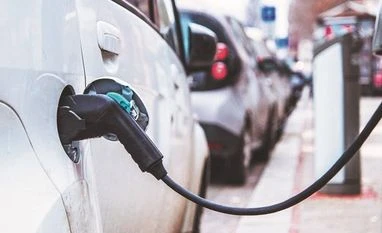 "Govt may support initiatives to retrofit old vehicles into EVs: Report")
WebinarsNew
Deep DiveNew
Explore Business Standard
The government may look for providing incentives or supporting initiatives to retrofit old vehicles into electric vehicles instead of scrapping them, a report said on Thursday
The government may look for providing incentives or supporting initiatives to retrofit old vehicles into electric vehicles instead of scrapping them, a report said on Thursday.
According to the joint report by management consultancy firm Primus Partners and ETB (European Business and Technology Centre), transitioning the internal combustion engine-powered vehicles to electric vehicles through retrofitting presents a spectrum of challenges.
However, with a coordinated approach involving government initiatives, industry collaboration, and public engagement, these challenges can be effectively addressed and overcome, it said.
India's Vehicle Scrappage Policy is aimed at phasing out old and unfit vehicles and replacing them with newer and more environment-friendly ones.
This policy is governed by various factors including the fitness and emission levels of vehicles rather than solely their age.
Commercial vehicles over 15 years and passenger vehicles over 20 years of age are subject to increased re-registration fees or scrapping under this policy.
"Instead of scrapping old vehicles, the government could provide incentives or support initiatives to retrofit old vehicles to run on electric power. This way, the lifespan of existing vehicles is extended," the joint report said.
Moreover, retrofitting could also offer a pathway to modernising the existing vehicle fleet, while simultaneously reducing emissions and aligning with the broader sustainability goals of a circular economy, said the report titled 'Retrofit for a greener future: Accelerating electric vehicle adoption'.
Emphasising that retrofitting is more than a temporary solution, the report said it is a significant step towards sustainable mobility, demonstrating a commitment to environmental stewardship.
As of 2023, the global retrofit vehicle market is estimated at USD 65.94 billion and projected to reach USD 125.37 billion by 2032 with a compounded annual growth rate of 7.40 per cent, as per the report.
Noting that retrofitting generally offers a quicker ROI (return on investment) across all vehicle types compared to purchasing new EVs, the report said that in the case of medium-duty trucks, the break-even point for retrofitting is achieved in approximately five years, compared to about 8 years for new electric vehicles.
This faster attainment of break-even is influenced by the substantial annual fuel savings, which contribute significantly to recouping the retrofitting costs, it said.
Similarly, for buses, the break-even for retrofitted electric vehicles is reached in around four years, which is notably quicker than the eight years required for new electric vehicles, as per the report.
As India strides forward in its commitment to the Paris Agreement and its own nationally determined contributions (NDCs), fostering a robust EV retrofitting ecosystem becomes pivotal. Market analysis suggests that the retrofitting sector is currently in its infancy. It exhibits significant potential for expansion due to technological simplicity and accessibility, the report said.
(Only the headline and picture of this report may have been reworked by the Business Standard staff; the rest of the content is auto-generated from a syndicated feed.)
First Published: Jan 18 2024 | 2:49 PM IST


 Connect with us on WhatsApp