Home / Industry / Auto / PV dealers likely to post 7-9% revenue growth in FY26: Crisil Ratings
PV dealers likely to post 7-9% revenue growth in FY26: Crisil Ratings
Passenger vehicle dealerships may see margin recovery and stable credit profiles in FY26 as SUV demand, rural recovery, and higher-margin services bolster growth
Realisation growth is estimated at 3–4 per cent, driven by price increases by original equipment manufacturers (OEMs) and a tilt towards higher-priced SUV models. Urban markets, which contribute nearly two-thirds of annual PV demand, are expected to
India’s passenger vehicle (PV) dealerships are projected to register revenue growth of 7–9 per cent in FY26, a 100 basis point improvement over the previous fiscal, said ratings agency Crisil. The uptick is expected despite only modest gains in vehicle realisations and elevated inventory levels lingering from last year.
Crisil’s analysis of around 110 PV dealers reveals that while the sharp post-Covid rebound has moderated, the sector is still benefiting from steady volume recovery and improved profitability. Volume growth for the fiscal is pegged at 4–6 per cent, supported by continued consumer preference for SUVs and stable rural demand, especially for small cars.
“Increasing urban disposable incomes due to revised tax slabs, lower interest rates, and benign inflation, coupled with the sustained popularity of SUVs, will drive urban demand. Rural sales are likely to benefit from a normal monsoon and improved farm incomes,” said Himank Sharma, director, Crisil Ratings.
Realisation growth is estimated at 3–4 per cent, driven by price increases by original equipment manufacturers (OEMs) and a tilt towards higher-priced SUV models. Urban markets, which contribute nearly two-thirds of annual PV demand, are expected to grow in tandem with rural markets this fiscal.
Operating profit margins, which dipped by 30–35 basis points last fiscal, are likely to rebound to 3.2–3.4 per cent in FY26. This recovery will be powered by reduced discounts and better ancillary income from higher-margin services such as motor insurance, accessories, servicing, and spares. These segments are now expected to contribute 11–13 per cent to overall revenues, up from around 10 per cent in recent years.
“Improved visibility in high-margin segments and a decline in year-round discounts will support margin expansion,” the report said.
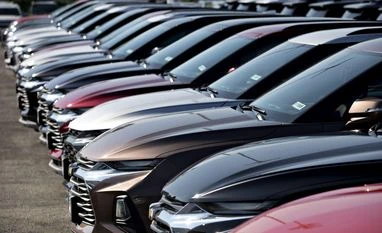
Inventory levels had surged to 50–55 days in FY25—well above the normal 30–35 days—as OEMs aggressively pushed stock amid slower retail sales. Dealers are expected to correct inventory by 5–10 days this fiscal, though it will remain above pre-FY24 norms.
“With only moderate inventory correction and limited capex planned for showroom expansion, dealer debt levels are likely to decline slightly,” said Ankita Gupta, associate director, Crisil Ratings.
Gearing is projected to improve to 1.0–1.1 times by March 2026 from the peak of 1.2 times as of March 2025. Interest coverage is expected to rise to 3.0–3.2 times, compared with 2.9 times in FY25—indicating stable credit profiles across the industry.
Crisil highlighted that while the outlook for the sector remains stable, the trajectory will depend on factors such as the pace of retail recovery, further inventory push by OEMs, and the interplay of urban–rural demand trends.
With the effects of pandemic-era volatility fading and the sector entering a more normalised growth phase, dealers appear better positioned in FY26—albeit with watchful eyes on margins, inventory, and rural sentiment.

 "PV dealers likely to post 7-9% revenue growth in FY26: Crisil Ratings")



