India’s leading two-wheeler (2W) manufacturers are entering 2026-27 (FY27) with cautious optimism, counting on sustained export momentum amid an increasingly uncertain global environment.
Hero MotoCorp, TVS Motor Company, and Bajaj Auto achieved major export milestones in 2025-26 (FY26). However, their FY26 annual reports also flagged geopolitical tensions, inflationary pressures, and supply-chain disruptions as potential risks to growth in FY27.
Hero said in its annual report that its cumulative exports crossed 5 million units during FY26, supported by strong demand across Latin America and its entry into European markets, including Germany, Italy, Spain, and the UK.
TVS said in its annual report that it recorded its highest-ever quarterly exports of around 400,000 units, while export revenue rose to ₹2,885 crore. Its Indonesian subsidiary, PT TVS Motor Company Indonesia, also crossed 1 million units in cumulative sales — a milestone the company described as historic.
Bajaj said in its annual report that monthly exports surpassed 200,000 units in October 2025 for the first time in 39 months. Its Pulsar and CT ranges also recorded their highest-ever annual export volumes.
Steady hands on handlebars
The three companies, however, struck a more measured tone on the year ahead. Hero said in its annual report that the Indian 2W industry had entered FY27 “on an optimistic footing”, supported by improving affordability, better rural conditions, stronger urban sentiment, and continued premiumisation. It identified inflationary pressures, geopolitical volatility, and commodity-related risks as key watchpoints.
The company has earmarked ₹1,500 crore in capital expenditure for FY27 to double its electric vehicle capacity and expand production of internal combustion engine scooters and premium motorcycles. Sudarshan Venu, chairman and managing director (MD) of TVS Motor Company, said in the company’s annual report that demand for two- and three-wheelers in India during FY27 was expected to “broadly track the previous year’s performance”. He cited the company’s diversified product portfolio, multi-sourced supply chain, and cost discipline as factors that would support performance. Venu said TVS remained “cautiously optimistic”, with India’s gross domestic product expected to grow by more than 6 per cent in FY27.
Rajiv Bajaj, managing director (MD) and chief executive officer of Bajaj Auto, was more circumspect in the company’s annual report. “As we look ahead to FY27, the external environment remains volatile, uncertain, and complex,” he said, pointing to geopolitical developments, commodity inflation, and supply-chain disruptions.
The company nevertheless described the opportunities before it as “very significant”. Its priorities for FY27 include strengthening its competitiveness in the 125cc-and-above motorcycle segment, increasing Chetak’s share of the electric 2W market, sustaining export momentum, and continuing the turnaround at KTM AG.
Taken together, the annual reports indicate that while manufacturers expect domestic demand to remain supportive, exports and premium products will remain key growth drivers in FY27. Geopolitical uncertainty, input-cost pressures, and evolving trade dynamics, however, are keeping them cautious about the pace of expansion.

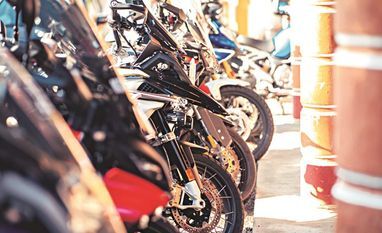 "Hero to TVS: Two-wheeler makers ride export wave, but watch road ahead")


 Connect with us on WhatsApp