Home / Industry / News / Beverage makers cite mass consumption, want 18% GST slab, no sin tax
Beverage makers cite mass consumption, want 18% GST slab, no sin tax
According to IBA, the non-alcoholic beverage industry was valued at $ 49.6 billion in 2023 and is poised to grow to $ 64 billion by 2028, registering a CAGR that outpaces global averages
IBA represents the non-alcoholic beverage industry in India, and leading players, including Coca-Cola, Pepsico, Reliance, Bisleri, Dabur, and Red Bull are its members.
2 min read Last Updated : Aug 27 2025 | 7:06 PM IST
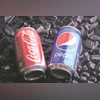
The non-alcoholic beverages sector has urged the government to reduce GST on aerated drinks to 18 per cent, which will make these products more affordable, drive investments and generate 1.2 lakh jobs annually by 2030.
Currently, aerated drinks attract 28 per cent GST and a sin tax of 12 per cent.
The government is proposing to rejig GST to a two-slab structure-- 5 per cent and 18 per cent. In addition, there will be a special rate of 40 per cent to be levied on select few items like ultra-luxury cars and sin goods. Currently, GST is a 4-tier structure of 5, 12, 18 and 28 per cent.
The Indian Beverage Association (IBA) said the rationalisation of GST for the sector will make products more affordable, increase investments in the sector and also generate 1.2 lakh new jobs annually by 2030.
The IBA, while appreciating the government for the next-generation GST reforms, said reclassification, GST rationalisation and placing the category in a standard GST rate will unlock the sector's true potential, driving investment, employment, farmer support, and ensuring inclusive growth for the Indian economy.
IBA represents the non-alcoholic beverage industry in India, and leading players, including Coca-Cola, Pepsico, Reliance, Bisleri, Dabur, and Red Bull are its members.
According to IBA, the non-alcoholic beverage industry was valued at $ 49.6 billion in 2023 and is poised to grow to $ 64 billion by 2028, registering a CAGR that outpaces global averages.
"With rationalised GST rates, 1.2 lakh new jobs annually could be generated by 2030, further boosting rural livelihoods. Over recent years, the sector has invested ₹ 50,000 crore and plans an additional ₹ 85,000 crore investment," said IBA.
Moreover, the industry is one of the largest procurers of agricultural commodities like sugar and mango from Indian farmers, fortifying the local agrarian supply chain and enhancing farmers' incomes.
Moreover, carbonated beverages are highly price-sensitive as 71 per cent of transactions are at ₹ 20 or less, and 65 per cent of consumers belong to lower socio-economic classes.
"With demand exhibiting high price elasticity, rationalising GST would help sustain affordability for mass-market consumers," said IBA.
(Only the headline and picture of this report may have been reworked by the Business Standard staff; the rest of the content is auto-generated from a syndicated feed.)


 "Beverage makers cite mass consumption, want 18% GST slab, no sin tax")

