Centre to provide 'one-time' financial support for waste recycling startups

Union Minister Bhupender Yadav said that his ministry has submitted guidelines for one-time financial aid to waste recycling start-ups in India, where municipal solid waste management is a big concern
Waste to energy, garbage
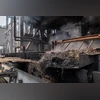
The Centre estimates that India has the potential to generate up to 5 gigawatts of waste-to-energy capacity. (Photo: Bloomberg)
Nisha Anand New Delhi
2 min read Last Updated : Sep 21 2024 | 1:24 PM IST
Union Environment Minister Bhupender Yadav said on Saturday that the Centre will give one-time financial assistance to startups which are focused on waste recycling. The initiative will also prioritise energy and water conservation while implementing a ban on single-use plastics.

During the cleanliness drive event at Juhu beach in Mumbai, Yadav said that his ministry has already submitted the guidelines for the proposal.
“The central government will support start-ups for recycling. My ministry has given guidelines for one-time financial support to such start-ups,” he said. “We know how to use nature’s products, but forget to recycle them and litter on beaches and roads. Our focus will be on saving energy, water, banning single-use plastic and stopping wastage of food, promoting healthy lifestyle and e-waste disposal,” Yadav said at an event meant to celebrate the International Coastal Clean-up Day.

How huge is India’s waste problem?

According to Bloomberg, India produces only a third of the daily waste per capita compared to European countries but the problems surrounding its disposal is a big concern for the most populous nation. Data estimates that Indian cities generate about 42 million tons of solid waste annually. For context, this is equivalent to the weight of 127 Empire State Buildings.

The Centre estimates that India has the potential to generate up to 5 gigawatts of waste-to-energy capacity. This is about 30 times compared to the current installed capacity of 168 megawatts. One of the key challenges in this area is waste segregation, as India currently lacks an effective comprehensive system for it. Most waste is sorted manually and often disposed of haphazardly before reaching incinerators.

Experts are of the view that without solving the segregation issue, the problem is posed to get worse. Municipal solid waste is set to grow 7 per cent to 8 per cent year to year, Anvesha Thakker, global co-lead for climate change and decarbonisation with KPMG in India, told Bloomberg.


*Subscribe to Business Standard digital and get complimentary access to The New York Times

Smart Quarterly

₹900

3 Months

₹300/Month

SAVE 25%

Smart Essential

₹2,700

1 Year

₹225/Month

SAVE 46%
*Complimentary New York Times access for the 2nd year will be given after 12 months

Super Saver

₹3,900

2 Years

₹162/Month

Subscribe

Renews automatically, cancel anytime

Here’s what’s included in our digital subscription plans

Exclusive premium stories online

  • Over 30 premium stories daily, handpicked by our editors

Complimentary Access to The New York Times

  • News, Games, Cooking, Audio, Wirecutter & The Athletic

Business Standard Epaper

  • Digital replica of our daily newspaper — with options to read, save, and share

Curated Newsletters

  • Insights on markets, finance, politics, tech, and more delivered to your inbox

Market Analysis & Investment Insights

  • In-depth market analysis & insights with access to The Smart Investor

Archives

  • Repository of articles and publications dating back to 1997

Ad-free Reading

  • Uninterrupted reading experience with no advertisements

Seamless Access Across All Devices

  • Access Business Standard across devices — mobile, tablet, or PC, via web or app

More From This Section

Topics :waste recyclingWaste segregationwaste managementBS Web ReportsEnvironment protection

First Published: Sep 21 2024 | 1:24 PM IST

Next Story
