Globally, Europe is the largest market for CBG, led by Germany, with strong policy support and high plant capacity, while China and India are driving rapid growth in the Asia-Pacific region, with China having the most plants, making them key players alongside established markets such as North America and emerging ones such as Brazil in South America.
In India, key players in the plant installation and technology space include Indian Oil (IOC), Bharat Petroleum (BPCL), and Hindustan Petroleum (HPCL), besides private players such as Nature Energy and Future Biogas. Key players in the downstream retailing segment include city gas distribution (CGD) entities and oil marketing companies (OMCs). In India, key players in the plant installation and technology space include Indian Oil (IOC), Bharat Petroleum (BPCL), and Hindustan Petroleum (HPCL), besides private players such as Nature Energy and Future Biogas. Key players in the downstream retailing segment include city gas distribution (CGD) entities and oil marketing companies (OMCs). India, with its large agricultural base, had in 2018 set an ambitious target of producing 15 million tonnes per annum (MTPA) of CBG through 5,000 plants by 2025, signalling the potential for green gas in its energy basket. However, that deadline has not been met despite the projected increase in demand. Now, India’s CBG demand is set to rise further, especially in areas without pipeline connectivity, with a mandatory 1 per cent blending with compressed natural gas (CNG) and piped natural gas (PNG) obligation that kicked in this fiscal year. The blend is expected to increase to 5 per cent by 2028-29, with a target of 3 million standard cubic metres per day (mmscmd) of CBG.

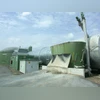 "Compressed biogas emerges as fast-growing pillar of India's energy mix")











