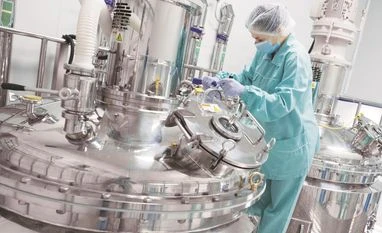
CRISIL SME Tracker: Global uncertainties to hit chemical manufacturers

MSMEs, which account for 25-30 per cent of the industry revenue, are expected to see growth moderate to 4-6 per cent in FY26 compared with 5-7 per cent last financial year

chemicals
The government, on its part, has imposed anti-dumping duty and minimum import price on certain basic chemicals and intermediates from the Middle east and China to protect local manufacturers
Crisil Intelligence
2 min read Last Updated : May 13 2025 | 9:53 PM IST
The Indian chemicals industry is expected to see revenue growth of 6-8 per cent in FY26 on account of continued growth from domestic end-user industries. However on-going geo-political uncertainties poses a challenge to the growth. To be specific growth for FY25 was about 8 per cent, which was on a low base and stable domestic demand.
 
Micro, small and medium enterprises (MSMEs), which account for 25-30 per cent of the industry revenue, are expected to see growth moderate to 4-6 per cent in FY26 compared with 5-7 per cent last financial year.
 
In view of ongoing tariffs related concerns, key monitorable will be excess supply in global trade. This may lead to pricing pressures for Indian companies specifically MSMEs potentially impacting their margins on exports. 
 
The government, on its part, has imposed anti-dumping duty and minimum import price on certain basic chemicals and intermediates from the Middle east and China to protect local manufacturers. While this is unlikely to have a major impact on large downstream players as they have better bargaining capability on account of scale and high sales volume, it will have an impact on the margins of downstream MSMEs.
 
That said, Indian specialty chemicals manufacturers have an opportunity to increase their share in global imports to US as China is facing higher tariffs. This advantage is likely to be a short-term one, though, as companies in the US are expected to scale up manufacturing.
 
For the record, the domestic chemical industry has around 300,000 MSMEs, primarily in the specialty chemicals segment, including agrochemicals, dyes, pigments, surfactants, and niche chemicals. Gujarat and Maharashtra collectively account for around 30 per cent of these because of established industrial infrastructure, access to raw materials, skilled labour and a favourable regulatory environment.
 
Import of specialty chemicals, including agrochemicals and surfactants, surged in FY24, driven by cheap Chinese imports and inventory clearance. However, imports are estimated to decline in FY25 as domestic production ramps up and global supply chains rebalance.

One subscription. Two world-class reads.

Already subscribed? Log in

Subscribe to read the full story →
*Subscribe to Business Standard digital and get complimentary access to The New York Times

Smart Quarterly

₹900

3 Months

₹300/Month

SAVE 25%

Smart Essential

₹2,700

1 Year

₹225/Month

SAVE 46%
*Complimentary New York Times access for the 2nd year will be given after 12 months

Super Saver

₹3,900

2 Years

₹162/Month

Subscribe

Renews automatically, cancel anytime

Here’s what’s included in our digital subscription plans

Exclusive premium stories online

  • Over 30 premium stories daily, handpicked by our editors

Complimentary Access to The New York Times

  • News, Games, Cooking, Audio, Wirecutter & The Athletic

Business Standard Epaper

  • Digital replica of our daily newspaper — with options to read, save, and share

Curated Newsletters

  • Insights on markets, finance, politics, tech, and more delivered to your inbox

Market Analysis & Investment Insights

  • In-depth market analysis & insights with access to The Smart Investor

Archives

  • Repository of articles and publications dating back to 1997

Ad-free Reading

  • Uninterrupted reading experience with no advertisements

Seamless Access Across All Devices

  • Access Business Standard across devices — mobile, tablet, or PC, via web or app

Topics :CRISIL SME TRACKERMSMECrisilChemical

Next Story