EVs must adhere to strict localisation rules under new e-mobility scheme
Centre introduced Electric Mobility Promotion Scheme (EMPS) as a transitional scheme, which will be in place till June 2024 after FAME-II ends on March 31, 2024
Vasudha Mukherjee New Delhi Electric vehicle (EV) manufacturers will need to adhere to stringent localisation and warranty standards to qualify for subsidies under the Electric Mobility Promotion Scheme (EMPS), which replaces the previous FAME II programme.
With the second phase of Faster Adoption and Manufacturing of Electric Vehicles (FAME-II) programme coming to an end on March 31, 2024, the Centre, on Wednesday, announced this new scheme to continue to promote e-mobility in the country. This scheme is set to be in place for four months, ending in June 2024. The scheme will provide financial support of Rs 10,000 per 2-wheeler, and Rs 25,000 for small three-wheelers.
EMPS, which serves as a transitional scheme, aims to minimise disruption in EV sales following the expiration of FAME II at the end of this month. It is expected to pave the way for a broader EV scheme post the financial year 2024-25 (FY25) budget.
Guidelines under EMPS
EMPS will require manufacturers to ensure a high level of localisation for subsidised models. EVs must also come with a comprehensive warranty of three years, or 20,000 km for two-wheelers and 80,000 km for three-wheelers, to be eligible for the scheme.
While FAME II also mandated a three-year warranty, it lacked clarity on after-sales service and whether the warranty included the battery. The comprehensive warranty mandated under EMPS, however, requires EV battery coverage, which is arguably the most critical component, and ensures adequate after-sales service throughout the vehicle's life.
Vehicles manufactured in India will be eligible for subsidies under EMPS.
Unlike FAME II, EMPS will allow EV makers to import parts temporarily while localising manufacturing.
However, companies must establish component manufacturing before availing incentives to prevent potential misuse, with only cells and the battery management system permitted for import. The traction battery pack must be assembled domestically.
Other components, such as the power and control wiring harness, wheel rim integrated with hub motor, and traction motor controller, must be manufactured locally to qualify for subsidies under EMPS.

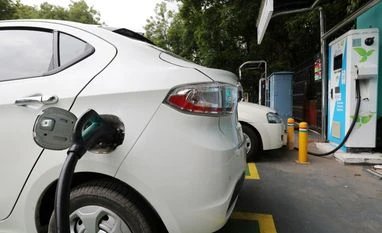 "EVs must adhere to strict localisation rules under new e-mobility scheme")


 Connect with us on WhatsApp