4 min read Last Updated : May 30 2025 | 12:05 AM IST
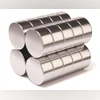
With China squeezing the supplies of rare earth magnets, used by auto companies, the Ministry of Heavy Industries has called a meeting of stakeholders on June 3 to finalise a concept note for a scheme to promote their manufacture in India.
The note will entail offering targeted financial incentives to companies that get into the business, a public-private partnership model to set up rare earth metal processing as well as magnet-production units, and identifying and collaborating with alternative sources in other countries to reduce India’s dependence on only China.
The move comes on the heels of a meeting this Wednesday between the ministry’s top officials and representatives of the auto industry. In the meeting the industry representatives hinted that their stocks of rare earth magnets were dwindling with many saying they would be forced to close their factories, which include those manufacturing electric vehicles and those running on the internal combustion engine (ICE), if imports from China did not resume soon.
Stakeholders asked the ministry to engage with China to simplify the cumbersome import regime as well as accept self-certification stating that the products are being used for the purpose for which they were stated.
The industry group also suggested a delegation of auto-company representatives go to China to take up the matter with the authorities there.
In the stakeholder consultations with the ministry, the government brought in consultancy firm EY, which will give a presentation, providing the details of the draft concept note on how the scheme will benefit the industry and will be made industry-friendly.
The note in discussion envisages that India should look at alternative sources for rare earth magnets and have identified Australia, Vietnam, Chile, Peru, and Russia for the purpose, with which they can collaborate.
Two, it also envisages developing a local ecosystem that would include mining rare earth metals and their processing to make the magnets in the country.
Sources aware of the discussions say the focus would be to encourage large-scale industries to participate across the value chain — from raw material access to finished magnets.
Three, to support the manufacturing of rare earth magnets, the government could look at a targeted incentive scheme for the industry (the government has provided incentives such as through the production-linked incentive scheme in various areas). Not only that, it envisages putting in a private-public partnership model which would include processing facilities of rare earth metals, followed by magnet production.
As many as 35 companies here import rare earth magnets from China. According to industry estimates, the requirement in two-wheelers ranges from 10 grams to 500 grams per vehicle while in cars it is between 100 grams and 3 kg per vehicle.
At macro level, based on projections for FY26, two-wheeler units will require 500 tonnes of rare earth magnets while those making cars will need around 300 tonnes, and the overall cost of both together is ₹306 crore.
While it accounts for a minuscule share of the bill of materials, without rare earth magnets one cannot make a two-wheeler or a car.
Rare earth magnets are required in components for both ICE and electric vehicles. The auto parts involved in this are speedometers, wheel-speed sensors, crankshaft position sensors, music systems, and motor control units.
In the case of ICE, it is also required specifically in the electric water pump as well as the ignition coil.
The crisis
* China restricts supply, leading to magnet shortages for Indian auto companies
* Auto industry warns of potential factory shutdowns if imports don’t resume
* 35 companies depend on Chinese magnets; usage ranges from 10g–3kg per vehicle