Mumbai recorded its strongest housing market performance in 14 years in 2025, with property registrations rising to 150,254, amid a sustained end-user demand and supportive supply-side ecosystem, according to Knight Frank India.
Stamp duty collections generated Rs 13,487 crore for the Maharashtra government, also a 14-year high, highlighting strong transaction volumes and improving property values.
Registrations increased by 6 per cent year-on-year (Y-o-Y), while stamp duty revenue rose by 11 per cent Y-o-Y. The data includes both new sales and re-sales across residential and commercial properties.
Market momentum remained strong through the year-end. In December 2025, 14,447 properties were registered, contributing Rs 1,263 crore in stamp duty revenue. Residential properties accounted for 80 per cent of registrations during the month. This translated into a 16 per cent Y-o-Y rise in registrations and an 11 per cent increase in stamp duty collections.
Sequentially, December registrations grew 18 per cent, while stamp duty revenue rose 22 per cent. December emerged as the second-strongest month of the year, after March, when registrations crossed 15,000 units, underscoring the consistency of housing demand in the city.
Shishir Baijal, international partner, chairperson and managing director, Knight Frank India, said 2025 marked a steady and mature phase for Mumbai’s housing market, reflecting its resilience and depth. He noted that sustained end-user demand and a more supportive supply-side ecosystem were key drivers, while higher stamp duty collections pointed to a gradual improvement in per-unit transaction values.
Amit Jain, chairperson and managing director, Arkade Developers, noted that new construction happening across the city has led to an increase in supply, and the city has validated the same with a parallel increase in demand.
The report added that affordability has improved significantly, with Mumbai’s affordability ratio now at 47 per cent, compared with earlier levels when equated monthly instalments consumed up to 97 per cent of household income. This shows that buyers are willing and able to commit capital at the right price points and with suitable product offerings.
In December 2025, registrations continued to skew toward higher price brackets. Homes priced above Rs 5 crore accounted for 7 per cent of registrations, up from 6 per cent a year earlier. Properties priced between Rs 2 crore and Rs 5 crore remained stable at 19 per cent, while the Rs 1 crore to Rs 2 crore segment rose from 30 per cent in 2024 to 32 per cent in 2025.
“Buyers want premium homes and holistic living, with amenities and proximity to essential services. Demand is being supported by strong economic growth and consumption. Investor demand is also rising, with rental yields improving across the city. Additionally, upgrading lifestyles, lower interest rates, and improving incomes will continue to act as catalysts for future residential demand momentum in the city,” Jain added.
The below Rs 1 crore segment saw its share decline from 44 per cent to 42 per cent, as affordability challenges weighed on buyer sentiment.
Units up to 1,000 square feet accounted for 82 per cent of registrations. Homes sized between 500 and 1,000 square feet were the most preferred at 46 per cent. Units between 1,000 and 2,000 square feet edged up to 15 per cent, while apartments above 2,000 square feet held steady at 3 per cent.
The Western and Central suburbs dominated activity, accounting for 86 per cent of December registrations, up from 84 per cent a year earlier. Western Suburbs led with a 57 per cent share, followed by Central Suburbs at 29 per cent. In contrast, South Mumbai’s share stood at 7 per cent (down from 8 per cent in December 2024).

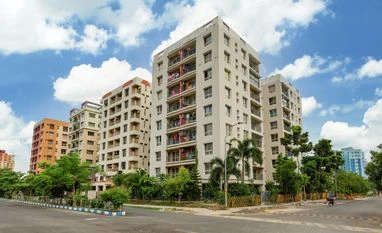 "At 150k, Mumbai logs highest property registrations in 14 yrs in 2025")


