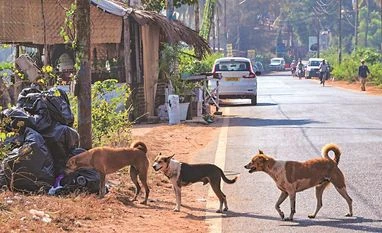
Anti-rabies vaccine (ARV) and immunoglobulin sales are gradually recovering after the Covid-19 slump, amid a marked increase in dog bite incidence.
The rise in sales follows a 76 per cent increase in dog bites, from 2.1 million in 2022 to 3.7 million in 2024. As a result, vaccine makers are preparing to ratchet up production.
Bharat Serums and Vaccines (BSV), an arm of Mankind Pharma, told Business Standard that it aims to expand manufacturing by 15-20 per cent, supporting India’s mission to eliminate rabies through timely and complete after-exposure treatment.
Data from market research firm Pharmarack shows that the combined number of ARV and immunoglobulin vaccines sold in July 2025 reached 723,000 units — the highest in two years. This represents a 16.2 per cent year-on-year increase from 621,000 units sold in July 2024.
On a moving annual turnover (MAT) basis, the figure rose from 6.85 million units in July 2023 to 7.59 million in July 2025.
“RV sales in MAT terms from August 2024 to July 2025 stood at ₹266 crore, after dipping to ₹215 crore for a similar period in July 2022,” said Sheetal Sapale, vice-president (commercial) at Pharmarack.
Many doctors report handling 25-35 dog bite cases per month in their outpatient departments. “Five years ago, we would see only 10-15 cases monthly,” said Neha Rastogi, consultant for infectious diseases at Fortis Gurgaon.
Trupti Gilada, consultant and infectious disease specialist at Mumbai’s Saifee Hospital, added that children aged 5-15 are most affected. “However, working adults, such as roadside vendors and pedestrians, are also at risk,” she said.
Rabies is 100 per cent fatal in humans once symptoms appear, making immediate wound assessment, blood testing, and vaccination critical.
Government data show rabies deaths in India rose from 43 in 2021 to 54 in 2024. These figures reflect only deaths reported by states and Union Territories to the Integrated Disease Surveillance Programme.
The World Health Organization estimates 18,000-20,000 rabies deaths occur annually in India, accounting for more than 36 per cent of global fatalities.
While reports of vaccine shortages amid rising cases have circulated, Rastogi observed intermittent supply strain in some states, though major hospitals have generally maintained stock.
“Rabies immunoglobulin, especially for children and severe Category-3 dog bites, can occasionally be in short supply, particularly in smaller healthcare facilities,” she said.
Another doctor from Mumbai said municipal hospitals and dispensaries have faced ARV and anti-rabies serum shortages, forcing patients to seek shots elsewhere.
To address this, vaccine makers are stepping up ARV production.
Sivani Serma Deka, chief operating officer for BSV’s India business, said the company has strengthened production capacity, secured critical raw materials, and reinforced distribution to high-incidence regions.
BSV manufactures Equirab, an immunoglobulin administered alongside ARV in severe dog bite cases, producing an average of 100,000 ARV doses per month for both public and private health systems.
“We are committed to increasing our capacity and reinforcing our supply chain to ensure no patient goes unprotected,” Deka said.
Other players in the sector include the Serum Institute of India, Bharat Biotech, Zydus Lifesciences, and GlaxoSmithKline Pharmaceuticals.
*Figures are on moving annual turnover basis, that is, for August 2020 to July 2021 and so on. | Source: Pharmarack
*Figures are for January only Sources: PIB, MoSPI, Ministry of Animal Husbandry, Dairying and Fisheries