
Realty books 19% of total realisation via insolvency proceedings: Report
Real estate accounts for nearly 19 per cent of the total realisation under insolvency proceedings, according to a report by Anarock and Khaitan & Co.
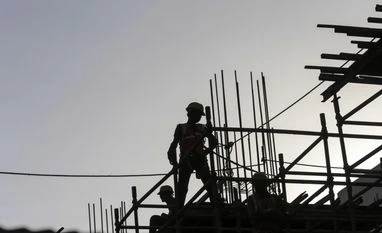 "Realty books 19% of total realisation via insolvency proceedings: Report")
Explore Business Standard

Associate Sponsors
Co-sponsor
Real estate accounts for nearly 19 per cent of the total realisation under insolvency proceedings, according to a report by Anarock and Khaitan & Co.
Real estate accounts for nearly 19 per cent of the total realisation under insolvency proceedings, according to a report by Anarock and Khaitan & Co.
Real estate consultant Anarock and law firm Khaitan & Co on Wednesday released a report 'Update on IBC (Insolvency and Bankruptcy Code) in Indian Real Estate'.
"The real estate sector on a reported basis accounted for more than 50 per cent of the total realisations under IBC. However, subsequent to the release of data by IBBI, a large key case went sub-judice following the admission of an appeal before the NCLAT, resulting in the real estate sector accounting for 18.8 per cent of total realisations under IBC," Anarock said in a statement.
Anarock's arm Anarock Capital MD and CEO Shobhit Agarwal said the total number of corporate insolvency resolution process (CIRP) cases filed has risen from an average of 208 per quarter in FY22 to an average of 313 in FY23.
"FY24, however, has commenced on a weak note with 238 cases admitted overall in the first quarter. Real estate cases have averaged about 18-20 in each quarter between October 2021 and December 2022. However, this jumped sharply in March 2023 to 44 corporate debtors being admitted into CIRP," he added.
Sudip Mullick, Partner, Khaitan & Co, said the CIRPs of real estate companies have increased in the last few quarters. Positive outcomes in the ongoing CIRPs of real estate companies would be the key to drive the confidence of homebuyers.
Kumar Saurabh Singh, Partner, Khaitan & Co, pointed out that one of the key reasons for the prolonged delay in the resolution of insolvencies has been the large number of vacancies in the NCLTs.
With a view to strengthen the bench, Singh said the government has recently appointed 21 members, which will take the bench strength closer to the sanctioned number of 63.
On the report, Mani Gupta, Partner, Sarthak Advocates & Solicitor, said, "As of June 2023, according to the IBBI's quarterly newsletter, there were a total of 6,815 insolvencies admitted. Among these, approximately 21 per cent or 1,431 were related to the real estate sector".
The percentage of resolved cases in the real estate sector as of June 2023 is about 41 per cent.
"The resolution of insolvency in the real estate sector continues to be shrouded in complications. These are compounded by the fact that generally, the committee of creditors comprises of majority home-buyers.
"The home-buyers often are unable to understand commercial nuances unlike banks and financial institutions, who were originally intended to be part of the committee," Gupta said.
The recent legislative changes around the role of the authorised representative for creditors in class will hopefully mark a shift in the decision-making of the home-buyers and result in more streamlined decision-making, Gupta added.
(Only the headline and picture of this report may have been reworked by the Business Standard staff; the rest of the content is auto-generated from a syndicated feed.)
First Published: Oct 18 2023 | 7:15 PM IST


