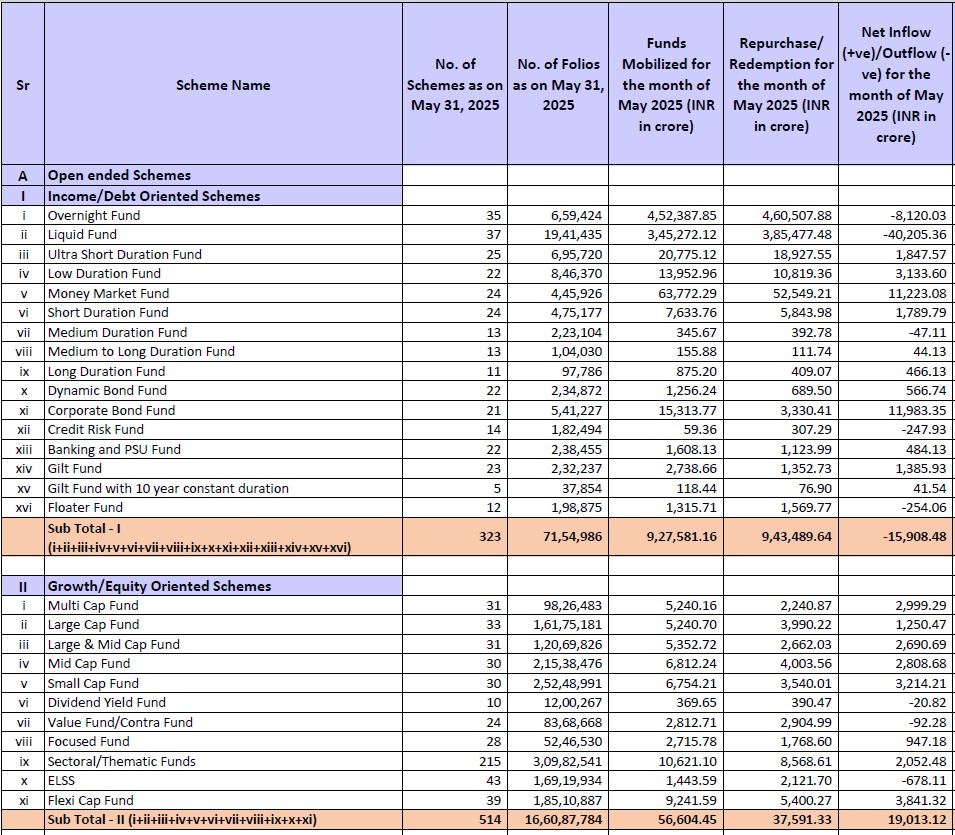
Equity MF inflows drop 21% MoM to Rs 19,103 crore in May 2025: AMFI data
What's particularly encouraging is the rise in hybrid categories-especially arbitrage, BAFs, and multi-asset funds, experts said.
Puneet Wadhwa New Delhi Flows to the equity mutual fund (MF) schemes dropped 21.6 per cent month-on-month (MoM) in May 2025 to Rs 19,013.12 crore, according to data released by the Association of Mutual Funds in India (AMFI) on Tuesday.
In March 2025, flows to equity MFs stood at Rs 25,082 crore, but had dropped to a 12-month low of Rs 24,269.26 crore in April 2025, reflecting cautious investor sentiment in the backdrop of geopolitical conflict between India and Pakistan, and uncertainty surrounding US tariffs, AMFI data showed.
CLICK HERE FOR AMFI'S DETAILED FACTSHEET "The dip in large-cap and flexi-cap inflows reflects near-term caution, but attractive valuations in large-caps could lead to renewed interest. Mid- and small-cap flows have also eased slightly, though long-term investor appetite for these segments remains intact," said Suranjana Borthakur, Head of Distribution & Strategic Alliances, Mirae Asset Investment Managers (India). Monthly systematic investment plan (SIP) contributions stood at a record Rs 26,688 crore in May, with the number of contributing accounts rising to an all-time high of 8.56 crore. Number of new SIPs registered in May 2025 stood at 59,14,788, AMFI said.
What’s particularly encouraging is the rise in hybrid categories—especially arbitrage, BAFs, and multi-asset funds—indicating that investors are using these as strategic tools to stay invested while managing short-term volatility.
"Arbitrage funds, in particular, are being seen as a safe space to temporarily park funds ahead of further deployment. Overall, investors appear to be making balanced and thoughtful allocation decisions across asset classes, aligned with their risk appetite and investment horizons,” Borthakur added.
Smallcap funds are getting lower allocations due to valuation concerns, analysts said, sector funds, on the other hand, are still getting a positive traction.
"Investors should be cautious while allocating being conscious of valuations in the popular sectors. If they pay attention to the PE ratios of the funds they are allocating to it will help rational capital allocation and lower chances of sectoral or thematic bubbles. The outflows from debt funds shows that investors are clear that there is better upside in equities than debt from a interest cutting cycle,” said Vikas Gupta, CEO & Chief Investment Strategist at OmniScience Capital.

 "Equity MF inflows drop 21% MoM to Rs 19,103 crore in May 2025: AMFI data")