A new direction for direct taxes

The recent focus on direct taxes must be complemented with an analysis of what is causing the slowdown in their collections
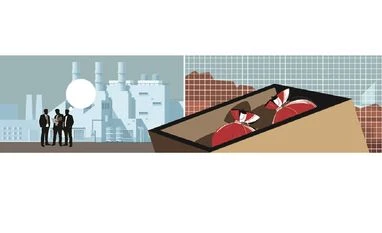
direct taxes
Illustration: Binay Sinha
A K Bhattacharya
6 min read Last Updated : Sep 12 2023 | 10:22 PM IST
The latest data on the government’s direct tax collections should cause some disappointment. In the first four months of the current financial year, direct tax collections have fallen by 0.91 per cent, in contrast to the Budget’s projection of an 11.36 per cent growth for the full year.

There was a bit of a surprise as well in these numbers. India Inc had reported healthy profit for the first quarter of 2023-24. However, corporation tax collections for the April-July period of 2023 fell by 10 per cent. Personal income-tax collections did grow by 6.6 per cent, but this was quite underwhelming, considering that the Budget had projected an annual growth rate of 14 per cent in 2023-24. Indeed, the direct taxes’ share in gross domestic product (GDP) in the first quarter of the current year was down to 4.67 per cent, against about 5 per cent in the same quarter of 2022-23.

Remember that the Union Budget for 2023-24 planned to ride heavily on the growth of direct taxes as one of the main sources of revenue to finance its ambitious capital expenditure plan, which saw an outlay increase of 36 per cent. Indirect taxes were budgeted to grow by only 8.5 per cent. But unlike direct taxes, indirect taxes, accruing to the Centre, have not been hugely off the target, clocking a growth rate of about 7 per cent.

Customs revenue has grown by a robust 27 per cent in the April-July period of 2023-24, while the total goods and services tax (GST) has seen a rise of over 11 per cent. If excise, dependent as it is on fuel products, has fallen by about 10 per cent, blame that on past duty reductions to soften the impact of higher crude oil prices on domestic retail prices of petroleum products.

Yet, there is little merit in the explanation that tax revenues in the first quarter or the first four months usually grow at a slower pace, leaving the remaining months in the year to do a bit of catching up. Data for the first four months of each of the last few years point to a different kind of problem.

Gross tax collections in the April-July 2023 period were estimated at 26.6 per cent of the annual target, lower than the over 28 per cent achieved in the same period of 2022. Even in the pre-Covid period of April-July 2019, gross tax collections accounted for about 27 per cent of the annual collections in 2019-20. A broadly similar trend also prevails for corporation tax and personal income-tax collections. Therefore, there is no reason to believe that a higher pace in direct tax collections in the remaining months of 2023-24 would make up for the earlier shortfall.

Instead, there is an urgent need for a detailed examination of why direct tax collections have failed to reflect the buoyancy in the Indian economy, as seen in the GDP numbers for the first quarter of 2023-24. The tax department has already swung into action by planning to send out notices to potential tax evaders. But that would not explain the apparent contradiction between growing profits or income and lower direct tax collections. Nor would that move necessarily bear immediate results.

It is important to understand a basic trend change in the composition of the Centre’s overall taxation. Since 2008-09, the share of direct taxes in total gross tax collections by the Centre has always stayed higher than that of indirect taxes, barring two years — in 2016-17 (the year of demonetisation) and 2020-21 (the year that bore the full impact of Covid). Understandably, therefore, the Union finance ministry’s focus has shifted more towards direct taxes, which has also resulted in better collections from corporation tax and personal income tax, particularly in the last two years.

But two major decisions were taken in the last few years — a gradual cut in corporation tax rates and the introduction of lower tax rates for individuals opting for an exemption-free regime. The phased cut in corporation tax rates was completed in 2019-20, while the new personal income-tax regime came into being last year. It is possible that the lower corporation tax rates have brought down the effective incidence of taxes on companies to a level where the actual collections have suffered.

The finance ministry’s analysis for the effective tax rate for companies shows that from about 24.67 per cent in 2014-15, it had already come down to 22 per cent in 2020-21. The effective tax rate is likely to have become lower in 2021-22 and 2022-23. Its impact on corporation tax collections needs to be studied and the taxation plan should have set the targets keeping this in mind.

Three more trends in direct tax collections are worth noting. The effective tax rate for services companies has come down sharply from 27 per cent in 2014-15 to 21 per cent, while that for manufacturing companies has gone up from 22 per cent to 25 per cent in the same period. This has happened even as the tax rate for new manufacturing companies has been slashed by a significant margin to 15 per cent plus surcharges. With services faring much better than the manufacturing sector, this too may be having an adverse impact on the pace of corporation tax collections.

Even more interesting is the data point that shows how companies earning over Rs 500 crore in annual profit have seen the sharpest decline in their effective tax rate — from 23 per cent in 2014-15 to 19 per cent in 2020-21. Companies with annual profits exceeding Rs 500 crore account for over half the total corporation taxes collected by the Centre. If their effective tax rate comes down further, its impact on overall tax collections would be significant.

Thirdly, the share of tax concessions offered to individual taxpayers has been rising steadily — from about 19 per cent of the total personal income-tax collections in 2014-15 to over 26 per cent in 2020-21. This share is expected to come down if more individuals opt for the exemptions-free taxation regime. But has this really come down?

The Centre’s greater focus on direct taxes to raise more revenue is a welcome initiative. But the recent decline in direct tax collections should make the government think hard on whether this is a transient phase or if there are deeper and fundamental flaws in the taxation regime. The trajectory of the effective tax rate, the rapid decline in the effective tax rate for service companies, and the steady rise in tax concessions for individual taxpayers are important pointers that need to be closely examined. Merely launching investigations or inquiries would not be enough and could even be counterproductive in many ways.

One subscription. Two world-class reads.

Already subscribed? Log in

Subscribe to read the full story →
*Subscribe to Business Standard digital and get complimentary access to The New York Times

Smart Quarterly

₹900

3 Months

₹300/Month

SAVE 25%

Smart Essential

₹2,700

1 Year

₹225/Month

SAVE 46%
*Complimentary New York Times access for the 2nd year will be given after 12 months

Super Saver

₹3,900

2 Years

₹162/Month

Subscribe

Renews automatically, cancel anytime

Here’s what’s included in our digital subscription plans

Exclusive premium stories online

  • Over 30 premium stories daily, handpicked by our editors

Complimentary Access to The New York Times

  • News, Games, Cooking, Audio, Wirecutter & The Athletic

Business Standard Epaper

  • Digital replica of our daily newspaper — with options to read, save, and share

Curated Newsletters

  • Insights on markets, finance, politics, tech, and more delivered to your inbox

Market Analysis & Investment Insights

  • In-depth market analysis & insights with access to The Smart Investor

Archives

  • Repository of articles and publications dating back to 1997

Ad-free Reading

  • Uninterrupted reading experience with no advertisements

Seamless Access Across All Devices

  • Access Business Standard across devices — mobile, tablet, or PC, via web or app

More From This Section

Disclaimer: These are personal views of the writer. They do not necessarily reflect the opinion of www.business-standard.com or the Business Standard newspaper

Topics :BS OpinionDirect taxesrevenue department

Next Story



