Can the Congress build on the BJP's fascination with its manifesto?

The Opposition, especially the Congress, will have to go much beyond press conferences and urban election meetings by taking these issues to voters in the rural hinterland
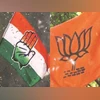
BJP Congress, political party, congress
It may be an exaggeration to say that the election has, therefore, turned in favour of the Opposition. But can the Opposition capitalise on this unusual phenomenon? | File image
Bharat Bhushan
6 min read Last Updated : Apr 29 2024 | 11:04 AM IST
The Bharatiya Janata Party’s (BJP’s) campaign suggests that, for once, it has no central narrative of its own. Prime Minister Narendra Modi has spent more airtime taking down the Congress’ manifesto than propagating his party’s own programme.

This could be the result of mistaken calculations.

The Ram Temple, which was meant to swing this election for BJP, has not clicked with the voters – once again proving the adage about the electorate’s short memory. The bravado embodied in the slogan, “Ab ki baar, 400-paar (this time around, more than 400 seats),” has boomeranged with people linking it to an alleged BJP agenda of changing the Indian Constitution. And by engaging every day with the supposed promise to “redistribute wealth” in the Congress manifesto, the prime minister has taken public and media attention away from the BJP’s promises.

It may be an exaggeration to say that the election has, therefore, turned in favour of the Opposition. But can the Opposition capitalise on this unusual phenomenon?

Take the issue of “redistribution of wealth”, which does not currently exist in the Congress manifesto. Isn’t that exactly what the Prime Minister has been doing? Aren’t the schemes to supply free food to 800 million Indians, pensions to farmers, free gas cylinders to women, free housing under PM Awas Yojana, etc., a “redistribution of wealth”? This is not new if one recalls that in his first national election, Narendra Modi promised to put Rs 15 lakh into the bank account of every Indian citizen from the seizure and repatriation of black money held abroad. Most recently, he vowed to find a way to return money and properties seized from criminals to their victims. 

Having inadvertently set the election narrative, the Congress should run with it instead of making knee-jerk denials and fussy clarifications. Only lately have some Congress leaders begun to seize this new opportunity before it.

Rahul Gandhi contrasted high unemployment figures with the massive concentration of wealth, where one per cent of the population owns 40 per cent of the nation’s wealth. He has declared that his party will give back to 90 per cent of Indians part of Rs 16 trillion given by the Modi government as loan waivers to big businessmen. The Congress is underlining the promise of reversing the inequitable economic policies of the Modi regime now that the focus is on its manifesto.

The Congress, for example, is also doing well to illustrate the effects of the BJP’s skewed economic policies by pointing to the fact that even after a decade of BJP rule, 800 million starving Indians still need free food for five more years. On the other hand, they point to policies that allow a government minister and businessman like Rajeev Chandrasekhar to declare a taxable income of just Rs 680 for 2021-22 and to the incredible anomaly that not even a single company of a Gujarati businessman, ranked number two amongst Indian billionaires, figures among the top ten corporate tax payers of India. This only proves - says the Congress - the Modi government’s inability to balance wealth creation with equitable development.

Prime Minister Modi has attacked the promise in the Congress manifesto of a socio-economic caste survey, which will be the basis of affirmative action by its government should it come to power. According to him, it means that if the Congress forms the next government, it will seize the silver and gold jewellery of ordinary citizens, including the auspicious gold “mangalsutra” of married women, and distribute it to its supporters (by insinuation, Muslims).

It should be quite easy to turn around this narrative by pointing to the massive increase in gold loans fuelled by economic distress in the last four and half years. Data from the Reserve Bank of India (RBI) shows that between 2020 and 2023, household indebtedness averaged 37 per cent of the GDP, touching a high of 39.2 per cent in 2021. The net financial savings of households touched a low 5.1 per cent of GDP in 2023 and 7.2 per cent in 2022.

The rush for gold loans to tide over distressed households was such that after Covid-19, the RBI started reporting loans against gold as a separate line in its monthly bulletins. RBI data shows an increase in gold loans from Rs 60,724 crore in 2021 to Rs 102,458 crore in 2024. This whopping increase of 69 per cent in gold loans proved that more households were parting with family jewellery to survive rising prices of basic essentials. The Opposition would do well to point out that the gold jewellery of households has already been hugely depleted under the economic mismanagement of the Modi regime.

Prime Minister Modi was caught off guard as his slogan of “400 paar” morphed into an accusation that the BJP wants to change the Constitution by winning a brute majority in Parliament. He has been compelled to deny that his party aims to end affirmative action mandated by the Constitution and to claim that the Constitution was immutable like the “Geeta, Ramayana, Mahabharata, Bible and Quran for the government. For us, the Constitution is everything.” The hyperbolic defence shows how deeply that allegation has been cut.

Popular Opposition to changing the Constitution arises not only from the fear of the Scheduled Castes, and the Other Backward Classes, of reservations being revoked. It also feeds on Muslim apprehensions that their rights as citizens will be impacted.

Equally, the talk of changing the Constitution raises misgivings about India’s federal structure. The BJP’s push for a unitary state has been aggressive enough, even without recasting the Constitution. The Southern states of India fear that an electorally empowered BJP might dilute India’s federal structure as well as erode its linguistic and cultural diversity. Neither Prime Minister Modi nor his party have tried to allay the fears of their critics.

The Opposition, especially the Congress, has finally begun to counter the BJP’s distortion of its manifesto and political intentions. But it will have to go much beyond press conferences and urban election meetings by taking these issues to voters in the rural hinterland.

One subscription. Two world-class reads.

Already subscribed? Log in

Subscribe to read the full story →
*Subscribe to Business Standard digital and get complimentary access to The New York Times

Smart Quarterly

₹900

3 Months

₹300/Month

SAVE 25%

Smart Essential

₹2,700

1 Year

₹225/Month

SAVE 46%
*Complimentary New York Times access for the 2nd year will be given after 12 months

Super Saver

₹3,900

2 Years

₹162/Month

Subscribe

Renews automatically, cancel anytime

Here’s what’s included in our digital subscription plans

Exclusive premium stories online

  • Over 30 premium stories daily, handpicked by our editors

Complimentary Access to The New York Times

  • News, Games, Cooking, Audio, Wirecutter & The Athletic

Business Standard Epaper

  • Digital replica of our daily newspaper — with options to read, save, and share

Curated Newsletters

  • Insights on markets, finance, politics, tech, and more delivered to your inbox

Market Analysis & Investment Insights

  • In-depth market analysis & insights with access to The Smart Investor

Archives

  • Repository of articles and publications dating back to 1997

Ad-free Reading

  • Uninterrupted reading experience with no advertisements

Seamless Access Across All Devices

  • Access Business Standard across devices — mobile, tablet, or PC, via web or app

More From This Section

Disclaimer: These are personal views of the writer. They do not necessarily reflect the opinion of www.business-standard.com or the Business Standard newspaper

Topics :Narendra ModiLok Sabha electionsBJPCongressOppositionUnited Oppositionelection manifesto

Next Story


