Elon Musk made his stage debut at a campaign rally alongside Donald Trump on October 5 at the Butler, Pennsylvania, rural farm showground. But did everyone notice the T-shirt peeking out from under his jacket? “Occupy Mars” was written there as a slogan.
Mr Musk’s SpaceX delayed its eighth Starship rocket test this week due to a booster problem. The world’s richest person is indeed a dream merchant. His SpaceX aims to put humans on Mars by 2026 and then build a self-sustaining city of a million inhabitants by 2050, perhaps under glass domes, as portrayed in James SA Corey’s series of novels The Expanse. Apparently, Mr Musk fears an impending “population collapse” on Earth and wants to ensure that life — of all species — can continue elsewhere if a meteor strike, like the one that wiped out the dinosaurs, occurs, or if World War III breaks out and humanity destroys itself. As one may remember, in the Antony Hoffman-directed 2000 film Red Planet, set in 2056, humanity has been terraforming Mars as its new home by bringing atmosphere-producing algae to its surface in response to Earth’s ecological crises. Sounds somewhat similar?
Mr Musk is aware that the process of colonising Mars would involve a fleet of reusable spaceships, a substantial financial outlay that might never be recovered, courageous explorers prepared to die in the adventure, and eventually a resident population.
Sometime in 2021, the Tesla boss changed his Twitter—now X—bio to read: “Technoking of Tesla, Imperator of Mars.” In ancient Rome, “Imperator” referred to an emperor or military commander. However, Mr Musk is by no means the first to champion the idea of colonising Mars. Many sci-fis have depicted that over the years. For instance, in the 1990 Hollywood film Total Recall, starring Arnold Schwarzenegger and Sharon Stone, and set in 2084, Mars is a colonised planet ruled by Vilos Cohaagen, a despotic leader who controls the extraction of lucrative turbinium ore.
However, how would the Martian economy function in real life? To start and maintain economic activities on Mars, labour, capital, technology, and even the atmosphere must be transported from Earth. What a pricey investment! Not to mention that Mars would likely have no other economic activity in the near future, at least, other than a possible
However, not everyone is enthralled by Mr Musk’s enthusiasm for Mars. Bernie Sanders, for example, argued that the money would be better spent on fighting hunger and poverty instead. According to a YouGov survey from 2021, around three-quarters of Americans were not interested in spending the rest of their lives on Mars, even if a safe journey is assured. Only 43 per cent of Britons surveyed by YouGov in 2019 said they would travel to the Red Planet if given the chance and assurance of a safe return.
The assumption of a guaranteed safe journey is unlikely to become a reality anytime soon. As Mr Musk himself has put it, “This is a very hard, dangerous, and difficult thing—not for the faint of heart. There’s a good chance you’ll die; it’s going to be tough going, but it will be pretty glorious if it works out.”
Can tourists find Mars an alluring destination? Mr Musk has previously estimated ticket prices for potential Mars settlers between $100,000 and $500,000. “Almost anyone can work and save up and eventually have $100,000 and be able to go to Mars if they want,” he stated. Indeed, Mr Musk? However, if the trip is not safe enough, would there even be enough ultra-rich tourists available?
The expense of colonising Mars is enormous and involves roughly $1 billion for every tonne of usable payload delivered to the planet’s surface. Even the world’s richest person wouldn’t be able to finance the Mars mission on his own. And if there’s no prospect of a profit or return, would the government or private investors be interested?
A fraction of the vast resources required for colonising Mars could instead be directed toward missions aimed at preventing environmental catastrophe on Earth, such as lowering the temperature by 2 degrees Celsius. Could that even reduce the urgency for a multiplanet civilisation? Yet, the Mars project marches on with full vigour, with organisations like NASA, Jeff Bezos’ Blue Origin, and Mr Musk’s SpaceX—perhaps all vying for the title of Imperator of Mars.

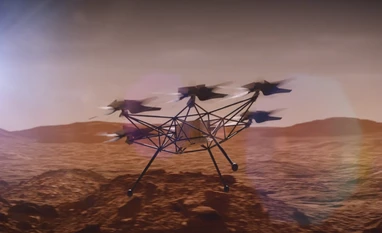 "Imperator of Mars: Should humanity prioritise space or saving Earth?")












 Connect with us on WhatsApp