Home / Opinion / Columns / Manmohan Singh, a gentle giant with vision and commitment to change
Manmohan Singh, a gentle giant with vision and commitment to change
Singh also had his pre-proposed ideas; what was in the textbook or his experience. But he opened the door; because he had an openness of thought, driven by his commitment to change
Our association was uncommon — even unusual. Manmohan Singh, India’s former economist-Prime Minister who passed away recently, was cut from the conventional cloth of market economics. Anil Agarwal was a dyed-in-the wool environmentalist. In 1991, when Singh brought India into the liberalised world of deregulation and open borders for trade we were not part of the cheering brigade. For us, the issue was what liberalisation would mean for the environment — our regulatory institutions were fragile and so would this opening of the economy lead to pollution and degradation? But interestingly, we were not dismissed by Singh, and this is what made him different from his ilk. He engaged with us. This is not to say that he accepted what we said. But he understood that this was a world that he had not considered. He wanted to know more, and wanted to understand what could be done to strengthen the systems so that the balance could be found. “Balance” was the operative word.
In the mid-1990s, when Anil started the first environmental-rating programme for industry, Singh agreed to chair the advisory committee. This was our effort, not just to benchmark performance but also to use measuring indicators to push and prod businesses. He did not fuss or flinch at our effort to demand more from industry than meeting regulatory standards. He understood the need for transformative action in a country like India, where natural resources needed for economic growth are scarce and pollution adds to costs that the poor cannot afford.
In 2004, when Singh took over as Prime Minister, Anil had tragically passed away and I was heading the Centre for Science and Environment. I was much younger and much less experienced, but not once did Singh make me feel inadequate. He let me visit him in the Prime Minister’s office; he heard what I had to say on issues ranging from water conservation to climate change. He not just listened but egged me on to provide solutions. “What needs to be done” — this was his focus.
In 2005, he asked me to chair the committee to review tiger conservation. I was overwhelmed by his trust in me, given that the other committee members were doyens in the field or were connected to the powerful conservation lobby of the country. It was a tough time as well. On the one hand, India had lost all tigers in the Sariska Tiger Reserve. On the other hand, this was also the time when the Forest Rights Act (FRA) was being discussed — to restore the historical injustice to the tribals so that they get tenure over the land they inhabited. But this land was forests and, in some cases, was under National Parks and sanctuaries where tigers and other animals roamed. It was a clash of agenda; it was also a class war — conservation vs tribals. Singh, frankly, was caught in between; he respected both sides and did not want to choose one or the other. The balance of both interests is what he sought.
I presented the report to him a few days before the official presentation. I wanted him to understand the agenda for action — particularly the need for an inclusive paradigm of conservation. He understood the stakes and the resistance and asked if I was certain this could be done and if key stakeholders were on board. I told him that it was difficult but not impossible. My request was that the report, Joining the Dots, be made public because this would build awareness about the agenda and drive policy change. My fear was that it would be shelved — as is often the fate of many reports. It is to his credit that much action happened for the conservation of tigers; numbers are up and, most importantly, we have better counting methods so that it is not pugmarks but tigers that are being counted. Later, he made me a member of the Prime Minister’s Council on Climate Change and on cleaning the Ganga. In all cases, I was never made to believe that I should not express my views, however different from the others in the room. In fact, my positions — as always to push the envelope — were encouraged by him, but with the caveat that the solutions had to be feasible.
This is why Singh and his particular brand of politics and persona will be missed in our world of extremes. Today we live in bubbles where we read and hear only the opinions of the people we agree with. We have no time for another’s views because it is not in consonance with our position and so irrelevant. Or because it does not fit into the formula of actions that we have been taught will work — the established book of rules. Singh also had his pre-proposed ideas; what was in the textbook or his experience. But he opened the door; because he had an openness of thought, driven by his commitment to change. He was a gentle giant that made power good.
The author is at the Centre for Science and Environment sunita@cseindia.org, X: @sunitanar
Disclaimer: These are personal views of the writer. They do not necessarily reflect the opinion of www.business-standard.com or the Business Standard newspaper

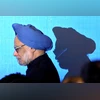 "Manmohan Singh, a gentle giant with vision and commitment to change")


 Connect with us on WhatsApp