5 min read Last Updated : May 11 2025 | 11:16 PM IST
United States President Donald Trump has put global trade in goods on the hot burner. It is impossible to predict the outcome of this reset in the world trade order, which is extremely complex in its interrelationships and has established itself as the only game in town for any country’s economic growth and prosperity. But it is important to take a step back and understand why it came about, what it has done to our world, and what can possibly be the way ahead.
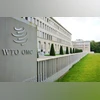
First, let’s peek into the past. This idea took shape in the early 1990s, when the world (largely the industrialised part) decided to replace the General Agreement on Tariffs and Trade (Gatt) with a formal global institution, the World Trade Organization (WTO). The idea was that this would bring world trade to a free zone — trade rules would be applied to all with assured compliance. The world would be one.
There was another objective that has come to bite the industrialised world today. It was well understood that the cost of manufacturing was high in this world. Plus, labour was expensive and the cost of environmental regulations was prohibitive. This was the time when the already industrialised countries were feeling the pain of local air and water pollution — from acid rain to toxins in rivers. They were facing huge public outrages and so, the classic “not in my backyard” (Nimby) principle came to be applied in the name of global trade.
Renowned American economist Larry Summers, who was with the World Bank in 1992 and went on to become president of Harvard University in 2001, wrote in an internal memo: “There is an economic logic to dump toxic waste in the lowest-wage country”. A report in The Economist put it bluntly — “‘let them eat pollution,’ says Summers”. The argument was brilliant; it would be cheaper to do business in low-wage countries, with minimal regulation. The richer you are, wrote Mr Summers, the more you want your environment to be clean and so the costs are higher. Public concern about toxic agents that have a one-in-a-million chance to cause prostate cancer would be high in countries where people survive to get prostate cancer, as compared to countries where under-five mortality is 200 per 1,000 people. Harsh words, which Mr Summers tried to squirm out of — but what he said was the absolute driver for economic and trade globalisation.
The WTO was born in 1995, and in 2001, China joined this body. There has been no looking back since. The fact is, global manufacturing moved lock, stock, and barrel from the industrial world to countries like China and then to Vietnam, Bangladesh, and Cambodia. It has been a game of finding the bottom: As costs of regulation and labour increase, so does the flight of industry in search of new greener pastures. We see this in India as well — as soon as the pollution regulator cracks the whip, industry moves out to “dark” unauthorised settlement areas. In this free-market world, the cost of labour and environment has to be discounted to stay competitive. Let’s not beat around any moral talk about the need to protect labour rights (including rights of child labourers) or the environment. It does not wash.
In the 25-odd years of this global trade order, there are now new losers and winners. In the early 1990s, when Arthur Dunkel’s draft proposal for the WTO was being pushed, the developing world was up in arms. There were protests in India, for instance, against the idea of unfettered global trade because, it was felt, it would destroy livelihoods of the poorest, particularly farmers, who faced the prospect of cheap food being dumped from the industrialised mega farms of the West. By 1999, when the ministers met in Seattle to celebrate the new world order, there was widespread and growing anger against “untamed globalisation”. Protesters also came from the richer world, which was seeing the flight of manufacturing and pain of unemployment. Climate change has been the other big casualty. The fact is, emission in the West never really reduced; it just moved to new production sites.
But all this was covered up: The winners made sure of this. Western companies moved to lower-income countries and made profits; consumers (all of us) were happy because of cheaper goods. In all this, the services and technology sectors boomed; banks and financial markets made money and with poor income-distribution policies, disparities sharpened. The bubble burst when Brexit happened — it was about jobs and, as I wrote then, the revenge of the rich. Mr Trump, in his first term, made the same protectionist and tariff noise of today. But, it was buried under the disruption of Covid.
Now, it is back with a bang. Of course, the global trading system has us all hooked. Low-wage countries have economically benefited from global trade. In this interconnected world of trade, services, and finance, disengagement will come at huge costs. But it is clear that something’s got to give. How this new trading system is designed would make or break much of our world. Let’s continue to examine this.
The author is at the Centre for Science and Environment sunita@cseindia.org, X: @sunitanar
Disclaimer: These are personal views of the writer. They do not necessarily reflect the opinion of www.business-standard.com or the Business Standard newspaper