The comic red line: What defines boundaries of comedians' free expression?

Jesters of the past enjoyed immunity. Today's comedians navigate power, backlash, and blurred lines
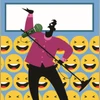
comedy, comedian
Many people become concerned if a well-known comedian speaks for gig workers nowadays. It’s true. However, it’s hard to say if that ultimately benefits gig workers
Atanu Biswas
4 min read Last Updated : Apr 11 2025 | 10:31 PM IST
In 1922, Rabindranath Tagore penned a short story titled Bidushok, which translates to “the clown.” In the story, Karnat was conquered by the king of Kanchi, who then destroyed the local villages. Bidushok, the king’s court jester, consequently resigned from his position. “I cannot kill or cut; by God’s grace, I can only laugh,” the Bidushok said. “I would forget to laugh if I were at the king’s court.” Since my boyhood, this “Bidushok” has served as my ideal model for a comedian, outlining their scopes and limits.
 
One hundred years later, comedians in contemporary India are in a different league. They are by no means required to perform as court jesters for anyone. Therefore, they’re also unable to enjoy the same immunity as mediaeval jesters enjoyed from their masters.
 
Touchstone, the court jester of Duke Frederick in Shakespeare’s As You Like It, is another stand-up comedian I really enjoyed. In a European mediaeval court, a jester was a professional joker or “fool.” Were they truly fools, though? Not at all. Touchstone, Feste, and Lear’s Fool were among the wisest of them. However, there were also natural fools in Shakespeare’s plays—like Dogberry, Nick Bottom, and Launce. Wise or not, they were all comedians, though.
 
While India is currently debating the acceptable boundaries of comedians’ free expression, I’m curious whether many of today’s comedians stir up controversy for reasons beyond just comedy. Over the past decade or so, several comedians have been accused of a range of offences — including obscene jokes, offensive remarks directed at well-known personalities, jokes about deities, insensitive comments about people from specific regions, disrespectful mimicry of a former President, sexist humour, public altercations, remarks about the judiciary, and using foul language while flying with another comedian. After confronting a prominent journalist, one individual was even banned by several airlines. Another was accused of defaming India on an international platform. Undoubtedly, some of these allegations were refuted or contested by those involved.
 
Due to their performances, advertisements, and controversies, some of these comedians are well-known in society. Many of today’s comedians are extremely wealthy and powerful, and comedy itself has immense power. Touchstone and other jesters were unable to acquire such authority. Many people become concerned if a well-known comedian speaks for gig workers nowadays. It’s true. However, it’s hard to say if that ultimately benefits gig workers. Moreover, and importantly, is such an act a component of comedy?
 
Furthermore, I think that the acts for which these comedians are receiving criticism are frequently beyond their comedy. Certainly, anybody can say whatever they wish, but the consequences would naturally follow. If a cricketer makes unpleasant remarks about someone else, or a poet is accused of writing obscene poetry, will they be able to escape the consequence? It’s true that some comedians have received extremely unacceptable backlashes from certain quarters. However, these may be broader societal problems rather than unique to comedy. If an actor or singer had done the same, they would have faced the same—equally unacceptable—consequences, unfortunately.
 
Comedians are under scrutiny elsewhere too. In the recent past, the French comedian Dieudonné was at the focus of an escalating dispute in France over the acceptable limits of free speech. A Belgian court sentenced him to two months in prison for “inciting hatred” during a performance there, and the Swiss Federal Court convicted him for racial discrimination due to his statements in Switzerland. In general, even though something — comedy, in this case — may have a broad reach, it should be used within its bounds.
 
Let’s get back to the difficult problem of outlining a framework of an ideal comedian, in general. To become a Touchstone, in the true sense of the term, a comedian must possess something special, indeed. A wonderful dancing statue of Touchstone is situated on Henley Street, in front of Shakespeare’s birthplace in Stratford-upon-Avon, England. As the sculptor James Butler put it, “My point being that we dance through life finely balancing optimism above us, but tragedy lurks behind,” the Jester symbolises the precarious balance of life. One cannot be a true “Touchstone” without this understanding and its manifestation, indeed. Instead, one simply remains as a jester.
 
The author is professor of Statistics, Indian Statistical Institute, Kolkata

One subscription. Two world-class reads.

Already subscribed? Log in

Subscribe to read the full story →
*Subscribe to Business Standard digital and get complimentary access to The New York Times

Smart Quarterly

₹900

3 Months

₹300/Month

SAVE 25%

Smart Essential

₹2,700

1 Year

₹225/Month

SAVE 46%
*Complimentary New York Times access for the 2nd year will be given after 12 months

Super Saver

₹3,900

2 Years

₹162/Month

Subscribe

Renews automatically, cancel anytime

Here’s what’s included in our digital subscription plans

Exclusive premium stories online

  • Over 30 premium stories daily, handpicked by our editors

Complimentary Access to The New York Times

  • News, Games, Cooking, Audio, Wirecutter & The Athletic

Business Standard Epaper

  • Digital replica of our daily newspaper — with options to read, save, and share

Curated Newsletters

  • Insights on markets, finance, politics, tech, and more delivered to your inbox

Market Analysis & Investment Insights

  • In-depth market analysis & insights with access to The Smart Investor

Archives

  • Repository of articles and publications dating back to 1997

Ad-free Reading

  • Uninterrupted reading experience with no advertisements

Seamless Access Across All Devices

  • Access Business Standard across devices — mobile, tablet, or PC, via web or app

Topics :BS OpinionComedystand-up comedyFreedom of speech

Next Story



