Time to assess impact of procurement reforms introduced three years ago

Various industry associations and chambers of commerce must stridently demand implementation across all levels and come up with their own impact analysis of these reforms

Sterlite Power Transmission
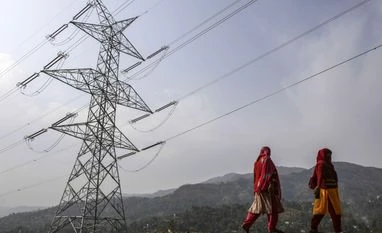
Photo: Bloomberg
Vinayak Chatterjee
5 min read Last Updated : Nov 14 2024 | 9:58 PM IST
The first 15 years of this century witnessed rising decibels of protests from Indian industry about two specific issues in doing business with the government — hugely delayed payments and the infirmities embedded in the L-1 (lowest bidder) method of selection. On both counts, many businesses that were substantial suppliers to the government faced existential hurdles, and it is believed the country lost out on quality suppliers.
 
It is not that the government was insensitive to these issues. For instance, the PRAAPTI portal (Payment Ratification and Analysis in Power Procurement for bringing Transparency in Invoicing of Suppliers) did much to track and improve the payments by electricity distribution companies to power generators, along with a series of hard-hitting consequences by the power ministry for delayed payments. From time to time, the government also attempted to improve payments to small and medium enterprises by a variety of directives and penalties.
 
However, the real systemic attack on this state of affairs happened under the leadership of T V Somanathan (now Cabinet secretary) during his tenure in the finance ministry. On October 29, 2021, the Department of Expenditure in the Ministry of Finance issued a notification innocuously titled “General Instructions on Procurement and Project Management.” Unlike other government announcements on reforms, this was uncharacteristically understated and was indeed, a classic case of “reform by stealth”.
 
At a general level, the 22-page note set out a plethora of desirable actions in government purchases for works contracts and services. But what should have drawn a cheer from the private sector was the tough stance taken on delayed payments. It mandated that “payments of not less than 75 per cent of eligible running-account bills shall be made within 10 working days of the submission of a bill. The remaining payment, after final checking of the bill, is to be made within 28 working days of the submission of the bill. The final bill should also be paid to the contractor within three months after the completion of work”.
 
Moreover, all project executing authorities implementing contracts involving aggregate payments of more than Rs 100 crore per annum were instructed to have an online system for monitoring the bills submitted by contractors, with the facility for contractors to track the status of their bills online.
 
The rules for “selection” were also reset. For all consultancy bids, three methods of procurement had already been followed: QCBS (quality and cost-based selection), LCS (least cost system), and SSS (single source selection). The notification now introduced FBS (fixed budget selection), where the price is fixed, and selection is based on maximum merit.
 
For “works and non-consultancy services”, the notification opened up the QCBS route, which was hitherto not generally allowed. This would henceforth be allowed under two conditions. One, where the project has been declared a QOP (quality-oriented procurement) by a competent authority, and two, for non-consultancy services, where the estimated value of procurement does not exceed Rs 10 crore. Under QCBS, the maximum weight of the non-financial parameters is to not exceed 30 per cent. So, finally the much-criticised L1 (lowest cost winner) framework has been sought to be dismantled.
 
It also makes a serious break from past inhibitions by allowing single bids. Even when only one bid is submitted, the process should be considered valid, provided the procurement was satisfactorily advertised, sufficient time was given for submission of bids, qualification criteria were not unduly restrictive, and the bid was found to be reasonable vis-a-vis expected values.
 
There are still several shortcomings that need to be addressed. One, “goods” are currently excluded. But whether it is sophisticated medical equipment or drone purchases, the QCBS method needs to be made applicable to purchase of such sophisticated goods also — not just works and services.
 
Two, the limitation of a maximum 30 per cent weight for non-financial scores in QCBS shows a lack of boldness in propagating this format. Indian firms are quite accustomed to 80:20 (technical:financial) structures in specific bespoke bids, including those under the auspices of multilateral funding as well as consultancies.
 
Three, the document is silent on Swiss Challenge as a method of procurement.
 
Four, what is crucially missing is getting states and state-level public-sector units (PSUs) to adopt and implement these reforms. Currently, these are applicable to only central government entities and central PSUs. After all, states account for over 60 per cent of all public procurement.
 
The most impactful and authoritative aspect of the current notification, however, is that its provisions are now part of the General Finance Rules of the Union of India. This has set the cat among the pigeons in the finance department of central government procuring entities, because violations will now invite censure from the Comptroller and Auditor General (CAG) and the Central Vigilance Commission.
 
It is rather surprising that this major reform in public procurement did not get the attention it deserved from Indian industry, and even from analysts and economic commentators. Now, three years since the notification of October 29, 2021, it is instructive to ask, what impact has it actually had on doing business with the government? The jury is still out, and it is now essential for the finance ministry to commission an independent assessment of the outcomes of these reform measures.
 
Finally, India’s private sector cannot appear to be somnolent around these historic measures taken. Various industry associations and chambers of commerce must stridently demand implementation across all levels and come up with their own impact analysis of these reforms.
 
The author is an infrastructure expert. He is also  the founder and managing trustee of The Infravision Foundation
 

One subscription. Two world-class reads.

Already subscribed? Log in

Subscribe to read the full story →
*Subscribe to Business Standard digital and get complimentary access to The New York Times

Smart Quarterly

₹900

3 Months

₹300/Month

SAVE 25%

Smart Essential

₹2,700

1 Year

₹225/Month

SAVE 46%
*Complimentary New York Times access for the 2nd year will be given after 12 months

Super Saver

₹3,900

2 Years

₹162/Month

Subscribe

Renews automatically, cancel anytime

Here’s what’s included in our digital subscription plans

Exclusive premium stories online

  • Over 30 premium stories daily, handpicked by our editors

Complimentary Access to The New York Times

  • News, Games, Cooking, Audio, Wirecutter & The Athletic

Business Standard Epaper

  • Digital replica of our daily newspaper — with options to read, save, and share

Curated Newsletters

  • Insights on markets, finance, politics, tech, and more delivered to your inbox

Market Analysis & Investment Insights

  • In-depth market analysis & insights with access to The Smart Investor

Archives

  • Repository of articles and publications dating back to 1997

Ad-free Reading

  • Uninterrupted reading experience with no advertisements

Seamless Access Across All Devices

  • Access Business Standard across devices — mobile, tablet, or PC, via web or app

Topics :BS Opiniongoods procurementpower generatorsPower Sector

Next Story