Home / Opinion / Editorial / A legend retires: Berkshire Hathaway will continue to be closely followed
A legend retires: Berkshire Hathaway will continue to be closely followed
Mr Buffett started investing as a schoolboy with the earnings from delivering newspapers. He learnt the theoretical structure of valuation at Columbia Business School in the 1950s
premium
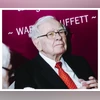
Mr Buffett’s investment philosophy is fairly transparent and his sharpness in stock-picking has been disguised by the ability to couch deep insights in simple aphorisms laced with humour. (Photo: Bloomberg)
3 min read Last Updated : May 06 2025 | 11:37 PM IST
Mega investor Warren Buffett’s impending retirement will mark the end of an era. For six decades, the “Oracle of Omaha” has consistently beaten the market. Between 1965 and now, his company Berkshire Hathaway has returned around 20 per cent compounded. That is roughly double the return from major indices like the Dow Jones Industrial Average and the S&P 500 over the same period. At 94, the chief executive officer (CEO) and largest shareholder of Berkshire Hathaway shows no signs of intellectual decline. However, the death of his friend and long-time partner Charlie Munger (1924-2023) may have played a part in coming to the decision to move to the background.
Vice-Chairman Greg Abel, who oversees Berkshire’s non-insurance businesses, will take over as CEO. Vice-Chairman Ajit Jain remains in charge of insurance-related businesses. Berkshire was a struggling textile business when Mr Buffett bought it. He turned it into the world’s biggest reinsurer. Its market value of $1.2 trillion plus makes it the world’s eighth-most valuable company. Insurers can generate large sums in cheap cash in terms of premiums collected, unless there are too many claims. Berkshire has consistently generated high returns by judiciously deploying that cash. Hence, Berkshire is the world’s largest value investor. Mr Buffett’s economic interest in Berkshire is worth about $168 billion, making him the world’s fifth-wealthiest individual. While the insurance business is very profitable, much of Berkshire’s market value is derived from the large portfolio of businesses it is invested in. In 2024, it was estimated that Berkshire held a listed portfolio worth around $265 billion. It also holds significant interests in many unlisted, profitable businesses and currently has a massive cash pile of $348 billion, mostly parked in United States Treasuries. Mr Buffett’s investment philosophy is fairly transparent and his sharpness in stock-picking has been disguised by the ability to couch deep insights in simple aphorisms laced with humour.
Mr Buffett started investing as a schoolboy with the earnings from delivering newspapers. He learnt the theoretical structure of valuation at Columbia Business School in the 1950s, where he was mentored by the legendary Benjamin Graham. Since then, he has spent a lifetime looking for businesses that promise to combine growth with stability. He buys such businesses, with the caveat that he will not invest unless he can understand the business model. He is famously wary of investing in technology firms (he doesn’t own a stake in Microsoft despite partnering Bill Gates on the bridge circuit) because he claims not to understand tech. He ignored the entire internet boom-bust cycle. But Mr Buffett does understand complex financial models and he’s always been willing to back his instincts in finance. The portfolio includes a host of consumer-facing businesses like Coca-Cola, Bank of America, and Apple. But Berkshire also holds big stakes across the financial sector. Part of the secret sauce is patience. Mr Buffett will wait until he thinks the price is right before buying. As and when the price is right, Berkshire will buy a big stake and allow the incumbent management to continue running the business, with light oversight.
One sign that he thinks the market is overvalued is the massive Berkshire cash pile. Mr Abel and Mr Jain are expected to find ways to deploy that pile as and when opportunities arise. Both have worked with Mr Buffett and Munger for decades. They are unlikely to radically alter the investment philosophy. Berkshire will continue to be closely followed by investors, fund managers, and students of financial markets.