A singular approach

Pollution-control plans must be coordinated across north India
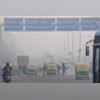
air pollution, delhi pollution
Delhi’s winter pollution-control measures require coordinated action across the National Capital Region and stubble-burning districts to deliver cleaner air (PTI Photo/Shahbaz Khan)
Business Standard Editorial Comment
3 min read Last Updated : Oct 22 2026 | 10:06 PM IST
The administration of Delhi has been admirably proactive in invoking the first stage of the Graded Response Action Plan (GRAP I) as soon as the air-quality index (AQI) in the city jumped from 179 to 244 (“poor”) in a day. The first of a four-stage response linked to the AQI levels bans coal and wood burning (including tandoors used in restaurants and open eateries) and the use of diesel-generator sets except in some circumstances. This comes just under a week ahead of Delhi’s winter-pollution action plan, which restricts petrol pumps from dispensing fuel to vehicles without valid pollution-control certificates, bans outside vehicles that do not conform to Bharat-VI emission standards, introduces a 50 per cent work-from-home mandate, doubles parking fees to discourage the use of personal vehicles, and restricts construction. These norms will be in place till the end of February. This early response is a well-meaning attempt to control winter pollution, for which the city has earned a global reputation. However, its efficacy is still to be tested, given the onset of the paddy stubble-burning season, the precipitous drop in wind speed, the monitoring abilities of the Delhi government, and the Diwali fireworks onslaught, which has, inexplicably, not been banned. 
But these are only some of the challenges in ensuring that the citizens of Delhi enjoy clean air this coming winter. To work, they need a far wider ambit of enforcement, which is beyond the remit of the Delhi government. Delhi is situated within a wider bustling urban agglomeration termed the National Capital Region, comprising districts in Haryana, Uttar Pradesh and Rajasthan. Most cities in these states account for the bulk of the urban pollution in India. For Delhi’s winter pollution- control action plan to work, it needs administrations in these areas to introduce reciprocal plans. Beyond the standard restrictions on old vehicles and construction — which have not proved noticeably effective these past winters — there is no evidence of synchronicity in planning. The National Capital Region Planning Board, which comes under the Union Ministry of Housing and Urban Affairs, could play a useful role in coordinating pollution-control plans. 
But this, too, will partially address the problem. The latest data for the AQI ranking shows that Delhi is not one of the 13 Indian cities listed among the top 20 most polluted ones in the world. That distinction goes to Bulandshahr, Pali, Mathura, Muzaffarnagar, Rohtak, Kota, Hapur, Bikaner, Bareilly and Hisar. Only Mumbai, Agartala, and Burhanpur (Madhya Pradesh) fall outside the northern Gangetic belt. Several of these urban polluters lie close to the stubble-burning zones. No northern city is immune to the dense smoke from fires that farmers routinely set to clear their fields ahead of the rabi season. So far, the governments of Haryana and Punjab — ground zero of stubble-burning — have yet to offer viable solutions to a problem that clearly demands intervention from the central government, as it is the result of long-term central agricultural policies. The bottom line, therefore, is that without a coordinated action plan that involves North Indian urban administrations as well as the rural districts, citywise pollution-action plans will prove largely ineffective. For the Union government, getting its act together is no longer a question of politics but of addressing a burgeoning public-health crisis.


One subscription. Two world-class reads.

Already subscribed? Log in

Subscribe to read the full story →
*Subscribe to Business Standard digital and get complimentary access to The New York Times

Smart Quarterly

₹900

3 Months

₹300/Month

SAVE 25%

Smart Essential

₹2,700

1 Year

₹225/Month

SAVE 46%
*Complimentary New York Times access for the 2nd year will be given after 12 months

Super Saver

₹3,900

2 Years

₹162/Month

Subscribe

Renews automatically, cancel anytime

Here’s what’s included in our digital subscription plans

Exclusive premium stories online

  • Premium stories handpicked daily by our editors

Complimentary Access to The New York Times

  • News, Games, Cooking, Audio, Wirecutter & The Athletic

Business Standard Epaper

  • Digital replica of our daily newspaper — with options to read, save, and share

Curated Newsletters

  • Insights on markets, finance, politics, tech, and more delivered to your inbox

Market Analysis & Investment Insights

  • In-depth market analysis & insights with access to The Smart Investor

Archives

  • Repository of articles and publications dating back to 1997

Ad-free Reading

  • Uninterrupted reading experience with no advertisements

Seamless Access Across All Devices

  • Access Business Standard across devices — mobile, tablet, or PC, via web or app

Topics :Stubble burningDelhiair pollutionwinter pollutionBusiness Standard Editorial CommentEditorial Comment

First Published: Oct 22 2026 | 10:06 PM IST

Next Story