Hopes for an early end to the three-year war between Russia and Ukraine were comprehensively dashed following United States (US) President Donald Trump’s much-anticipated meeting with Russian President Vladimir Putin in Alaska. Even given the low expectations from this meeting, the result could not have been worse for embattled Ukraine, for the signals it sends to countries with irredentist ambitions, notably China (Taiwan) and the US (Greenland). At most, it offers more compelling evidence of the US’s abdication of its role as a principled interlocutor in global conflicts. After affording Mr Putin a lavish welcome, including a red carpet and ride in “The Beast”, the armoured US presidential limousine, to the venue of the meeting, Mr Trump failed to secure even a ceasefire agreement. Instead, he backtracked, apparently backing Mr Putin’s plans for Ukraine to cede territory Russia holds in the east as a condition for a peace agreement. At a press conference, Mr Trump alluded to eliminating the “root causes” of the conflict before a peace deal could be made. Mr Putin, on his part, suggested that the talks were “constructive” and Ukraine was just one of the topics discussed. Mutual trade and space exploration were others, apparently.
The Alaska meeting has been fruitful only for Mr Putin. Shunned by Western nations for his invasion of Crimea in 2014 and Ukraine in 2022, his first meeting on US soil since then has immeasurably strengthened his stature. With an International Criminal Court (ICC) warrant against him, Mr Putin has only visited such Russian allies as North Korea, Belarus, and Mongolia before this (the US is not an ICC signatory so the meeting broke no international rules). In terms of geopolitical stability, the immediate and long-term consequences of the Alaska meeting are deeply concerning. For Ukraine and President Volodymyr Zelenskyy, whose gallant defence of his country is being stretched dangerously thin, the Alaska meeting did not make much headway. Ahead of a meeting at the White House scheduled for Monday, he can expect more pressure to cede the 20 per cent of Ukraine, including coal-rich Donetsk, which Russia has captured. Since he is unlikely to agree, US-Ukraine relations may be hit, with all its implications for much-needed military support, on which Kyiv is dependent in its war against the better-resourced and larger Russian nation.
Alaska’s suboptimal outcome also weakens the 76-year-old North Atlantic Treaty Organization (Nato) alliance. Post-Alaska, most key Nato nations have agreed to continue supporting Ukraine with materiel, intelligence, and training. Such assistance underlines a moral commitment; it is unclear how far it will help Ukraine since the US has done the heavy-lifting in terms of military and financial support. Meanwhile, fault-lines within the alliance are emerging, with Slovakia and Hungary praising Mr Putin for his Alaska “win”. Leaders of both countries have criticised the European Union for what they see as its “rigid” stance on the conflict. Given Mr Trump’s maverick, transactional style, it is unclear whether India can expect a post-Alaska rollback of the punitive 25 per cent tariff for buying Russian oil, although Mr Trump is reported to have indicated that the penal additional duty on India for buying Russian oil would be reconsidered. After all, in the space of six months, Mr Trump has swung from deriding Mr Putin to embracing his Ukrainian agenda for no notable gains to the US. Where India will figure in this perpetual policy pendulum remains to be seen.

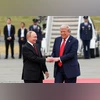 "Alaskan encounter: Only Russian President Putin gained from the meeting")











