Cloud over RE: India's green energy becomes a victim of its own success

Green energy is a victim of its own success
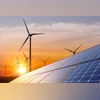
Energy, Solar energy, Wind Energy
(Photo: Shutterstock)
Business Standard Editorial Comment
3 min read Last Updated : Feb 10 2025 | 11:04 PM IST
One reason India may miss the February 10 deadline for submitting its third round of climate-action plans under the Paris Agreement or upgrade its targets may lie in a cloud over adopting renewable energy (RE). As reported by this newspaper on Monday, RE projects of 40 Gigawatts (Gw), tendered by four government-designated Renewable Energy Implementation Agencies (REIAs), have failed to find buyers. A February 5 review meeting of the Ministry of New and Renewable Energy revealed that these projects, awarded by RE-tendering agency Solar Energy Corporation of India (SECI) and state-owned generators NTPC, NHPC, and SJVN, have been pending for over a year because no state government has opted to sign power-sale agreements (PSAs) with the RE generator. The pending tenders amount to just under half the 94 Gw of RE-project bids issued by the four agencies in 2023-24. As a result, the option of pausing new tenders until all PSAs or power-purchase agreements (PPAs) are signed with the REIAs was being considered.
 
The problem is not lack of demand but the steadily falling cost of solar as well as wind equipment and reduced financing charges, which drive per-unit generation costs steadily lower. The average cost of solar power per unit, for instance, is Rs 2.50, making it the cheapest source of electricity in the country. Logically, then, notoriously cash-strapped state electricity boards (SEBs), key distributors of power, should be eagerly signing up to buy this power, especially now that the technology for storage batteries is evolving. But with RE prices falling rapidly with each auction, SEBs are understandably reluctant to sign PSAs or PPAs at theoretically higher contracted prices. Though prices stabilised somewhat in 2024, a joint study by Teri and United States-based think tank Climate Policy Initiative has predicted that the cost of solar-power generation is set to fall to as low as Rs 1.9 per unit through to 2030. This issue was the proximate cause for allegations of bribery involving an SECI-approved solar power project of the Adani group, which is being investigated by the US. In short, the RE industry is becoming something of a victim of its own success.
 
The consequence of this unique structural problem is that, as the Business Standard report points out, further investment in the RE sector is stalled. For instance, SECI’s failure to sign PPAs has caused the Central Electricity Regulatory Commission to reject the tariff discovered in the REIA’s first ever tender for grid-scale battery energy storage systems (BESS), a key technology that integrates RE power sources into the grid, from 2022. BESS technologies are critical because they enable the grid to address the problems associated with the variable nature of RE power. That is a key reason that although RE accounts for 46.3 per cent of installed capacity, coal continues to account for the bulk of the actual generation. This combination of constraints makes such Paris Agreement targets of raising the capacity of non-fossil fuel-based power generation to 500 Gw by 2030 somewhat unrealistic. The upshot is that despite the government’s best efforts, including rapidly expanding programmes such as the PM Surya Ghar Muft Bijli Yojana, to provide residential households rooftop solar power, chances are that India will remain a coal-powered economy for many years to come.

One subscription. Two world-class reads.

Already subscribed? Log in

Subscribe to read the full story →
*Subscribe to Business Standard digital and get complimentary access to The New York Times

Smart Quarterly

₹900

3 Months

₹300/Month

SAVE 25%

Smart Essential

₹2,700

1 Year

₹225/Month

SAVE 46%
*Complimentary New York Times access for the 2nd year will be given after 12 months

Super Saver

₹3,900

2 Years

₹162/Month

Subscribe

Renews automatically, cancel anytime

Here’s what’s included in our digital subscription plans

Exclusive premium stories online

  • Over 30 premium stories daily, handpicked by our editors

Complimentary Access to The New York Times

  • News, Games, Cooking, Audio, Wirecutter & The Athletic

Business Standard Epaper

  • Digital replica of our daily newspaper — with options to read, save, and share

Curated Newsletters

  • Insights on markets, finance, politics, tech, and more delivered to your inbox

Market Analysis & Investment Insights

  • In-depth market analysis & insights with access to The Smart Investor

Archives

  • Repository of articles and publications dating back to 1997

Ad-free Reading

  • Uninterrupted reading experience with no advertisements

Seamless Access Across All Devices

  • Access Business Standard across devices — mobile, tablet, or PC, via web or app

Topics :Business Standard Editorial Commentrenewable energyRenewable energy market

Next Story


