Tangled trade ties: US-China agreement offers little hope of breakthrough

For other trading partners, the US-China deal, as it currently stands, suggests that tariffs would settle at significantly higher levels than before the announcement of the so-called reciprocal tariff

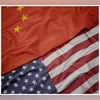
US China flag, US-China flag
China had imposed a licensing requirement for the export of several rare-earth elements and raised tariffs on US imports in response to the “Liberation Day” tariff increase. The US responded by imposing a 145 per cent tariff on Chinese imports. (Photo: Shutterstock)
Business Standard Editorial Comment Mumbai
4 min read Last Updated : Jun 12 2025 | 10:18 PM IST
United States (US) President Donald Trump on Wednesday said that he was willing to extend the July 9 deadline to complete the ongoing trade negotiations. In a state of heightened trade and economic incertitude, this will only provide marginal relief to the US’ trading partners. However, this, in part, reflects the US administration’s acceptance of the fact that negotiating trade agreements with individual countries is a complex and time-consuming exercise. America is reported to be negotiating trade agreements with 15 large trading partners. India is also in the process of finalising a trade agreement with the US, though it is hard to say with certainty whether it will be done by July 9. It is also not clear to what extent the US is willing to extend the deadline.
  Thus far, the US has only finalised a trade agreement with the United Kingdom. It reached a preliminary agreement with China on Wednesday, though very little in terms of detail was available. Mr Trump announced on Truth Social that a deal with China was done, but was subject to his and the Chinese President’s approval. According to the statement, the US tariff on China will be 55 per cent while China will impose a 10 per cent tariff on US imports. China has also agreed to open up the exports of rare-earth elements, while the US will allow Chinese students to study in its universities. The US has also reportedly agreed to resume the export of some hi-tech items to China, which were discontinued due to national security concerns.
  China had imposed a licensing requirement for the export of several rare-earth elements and raised tariffs on US imports in response to the “Liberation Day” tariff increase. The US responded by imposing a 145 per cent tariff on Chinese imports. Much of it has now been reversed. However, it is unclear whether the announced tariff rates between the US and China will be final. What is clear is that the world’s two largest economies are dependent on each other far more than the Trump administration is willing to recognise. Besides, the Chinese appear to have the upper hand because of their dominant control of the supply chain of rare-earth elements. These are essential to the modern economy and are required in mobile phones to defence equipment. To what extent China will use this leverage to garner concessions in the coming weeks and months remains to be seen. It may not want to settle at a 55 per cent tariff rate, which could severely affect exports. Therefore, it will be important to wait for the final agreement. 
  For other trading partners, the US-China deal, as it currently stands, suggests that tariffs would settle at significantly higher levels than before the announcement of the so-called reciprocal tariffs, and reaching an agreement will not be easy. While the US administration is willing to extend the deadline, its policy path will affect economic outcomes both in the US and the rest of the world.  The Organisation for Economic Cooperation and Development, for instance, recently projected that US economic growth would slow to 1.6 per cent in the current year, as against 2.8 per cent in 2024. It also expects the inflation rate to inch up close to 4 per cent in the last quarter of the current year and remain above target in 2026, which will restrict the Federal Reserve from reducing the policy interest rate. Overall, despite the Trump administration’s willingness to extend the deadline and an agreement with China, which is subject to approval, global trade outlook remains extremely uncertain.
   

One subscription. Two world-class reads.

Already subscribed? Log in

Subscribe to read the full story →
*Subscribe to Business Standard digital and get complimentary access to The New York Times

Smart Quarterly

₹900

3 Months

₹300/Month

SAVE 25%

Smart Essential

₹2,700

1 Year

₹225/Month

SAVE 46%
*Complimentary New York Times access for the 2nd year will be given after 12 months

Super Saver

₹3,900

2 Years

₹162/Month

Subscribe

Renews automatically, cancel anytime

Here’s what’s included in our digital subscription plans

Exclusive premium stories online

  • Over 30 premium stories daily, handpicked by our editors

Complimentary Access to The New York Times

  • News, Games, Cooking, Audio, Wirecutter & The Athletic

Business Standard Epaper

  • Digital replica of our daily newspaper — with options to read, save, and share

Curated Newsletters

  • Insights on markets, finance, politics, tech, and more delivered to your inbox

Market Analysis & Investment Insights

  • In-depth market analysis & insights with access to The Smart Investor

Archives

  • Repository of articles and publications dating back to 1997

Ad-free Reading

  • Uninterrupted reading experience with no advertisements

Seamless Access Across All Devices

  • Access Business Standard across devices — mobile, tablet, or PC, via web or app

Topics :Business Standard Editorial CommentEditorial CommentBS OpinionUS trade dealsIndia tradeUS China trade war

Next Story