Associate Sponsors

Co-sponsor

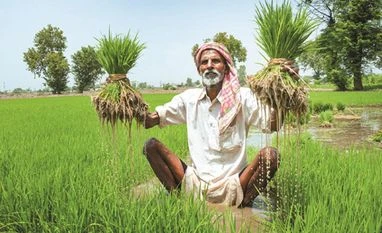
India is expecting a normal monsoon this year, which will help boost agricultural production. However, it may still have a limited effect on states where groundwater is depleting at an alarming rate. The adoption of the wheat-paddy cultivation cycle in the states of Punjab and Haryana, for example, has been accompanied by severe groundwater depletion. To arrest the negative externalities of extensive paddy cultivation, both states enacted similar legislation in 2009 — the Punjab Preservation of Subsoil Water Act (PPSWA) and the Haryana Preservation of Subsoil Water Act (HPSWA). The laws aimed to synchronise paddy sowing timing with the onset of monsoon. Accordingly, the PPSWA prohibits sowing and transplantation of paddy seeds before May 10 and June 10 every year. In Haryana, the corresponding dates are May 15 and June 15, respectively. However, while the shift has not been able to address the water issue, it has led to unintended consequences.

A new paper by the National Institute of Agricultural Economics and Policy Research has highlighted the unintended consequences of the twin laws — stubble burning and air pollution in northern India. The data shared by the Punjab Agriculture Department suggests that paddy, a water-guzzling crop, occupies around 88 per cent of the kharif cropped area in the state. In Haryana, the corresponding figure is 52 per cent. With farmers primarily relying on groundwater irrigation, paddy accounts for 80 per cent of groundwater irrigation in Punjab and 47 per cent in Haryana. The Dynamic Ground Water Resource Assessment Report for 2023 estimates the average stage of groundwater extraction in India at 59.26 per cent. In Punjab and Haryana, the extraction rate stands at 163.76 per cent and 135.74 per cent, respectively. It was assumed that the introduction of the planting laws would reduce groundwater extraction.

Unfortunately, the laws were not very successful. The rate of groundwater storage (GWS) saw an improvement between 2010 and 2013, but deteriorated thereafter. Further, the shift in the transplantation of paddy by over a month has led to the shrinking of the window between harvesting and planting the next rabi crop. Farmers are left with little time to prepare the field between the two cropping cycles, and they resort to burning the crop residue, which ultimately releases aerosol particulate matter (PM2.5, PM10) into the atmosphere. Stubble burning, which intensifies by the first week of November, happens to coincide with low wind speeds in northern India, and this discourages the dispersion of pollutants. The laws were rendered ineffective also because of high minimum support prices (MSP) for paddy combined with input subsidies, which continue to incentivise farmers to expand the area under paddy cultivation. This results in groundwater over-extraction and the generation of more stubble.

On this part, the government has taken many steps to encourage farmers to diversify from paddy. For instance, a few months back, the central government proposed to purchase masoor, urad, arhar, maize, and cotton over the next five years at their MSP under a contractual agreement from farmers in the region. However, the assured procurement of wheat and paddy for the central pool, coupled with a high average gross return over the actual cost of cultivation, prevents them from diversifying. But doing away with the laws is not a remedy. Instead, more initiatives must be taken for crop diversification, adoption of direct seeded rice, paddy straw management, and raising MSP and assuring procurement for alternative crops.

One subscription. Two world-class reads.

Already subscribed? Log in

Subscribe to read the full story →
*Subscribe to Business Standard digital and get complimentary access to The New York Times

Smart Quarterly

₹900

3 Months

₹300/Month

SAVE 25%

Smart Essential

₹2,700

1 Year

₹225/Month

SAVE 46%
*Complimentary New York Times access for the 2nd year will be given after 12 months

Super Saver

₹3,900

2 Years

₹162/Month

Subscribe

Renews automatically, cancel anytime

Here’s what’s included in our digital subscription plans

Exclusive premium stories online

  • Over 30 premium stories daily, handpicked by our editors

Complimentary Access to The New York Times

  • News, Games, Cooking, Audio, Wirecutter & The Athletic

Business Standard Epaper

  • Digital replica of our daily newspaper — with options to read, save, and share

Curated Newsletters

  • Insights on markets, finance, politics, tech, and more delivered to your inbox

Market Analysis & Investment Insights

  • In-depth market analysis & insights with access to The Smart Investor

Archives

  • Repository of articles and publications dating back to 1997

Ad-free Reading

  • Uninterrupted reading experience with no advertisements

Seamless Access Across All Devices

  • Access Business Standard across devices — mobile, tablet, or PC, via web or app

Topics :Business Standard Editorial CommentIndian monsoonagricultural sectorPaddy

Next Story