Work in progress

Foreign trade policy must engage with realities of world trade
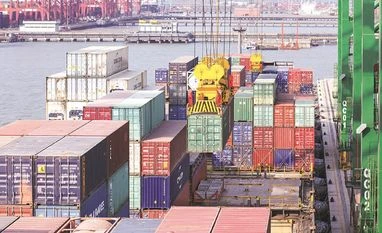
exports, imports, trade
Business Standard Editorial Comment Mumbai
3 min read Last Updated : Apr 02 2023 | 11:32 PM IST
The Union Ministry of Commerce and Industry has released its latest Foreign Trade Policy (FTP23). The last FTP was released in 2015 and was supposed to cover the period till 2020. No successor policy was released, and it was argued that the exigencies of the pandemic, with its enormous effect on world trade, were delaying the design and release of a policy for the next five years. Now that FTP23 has been released, this argument seems less persuasive. There does not seem to be any explicit understanding in the policy of the changes that have been imposed on the world trading system by the pandemic and various other simultaneous phenomena. These include the growth of trade tensions between the US and China; a broader rebalancing of many supply chains away from China; the use of economic coercion and of sanctions; the increasing use of industrial policy and non-tariff barriers in developed countries; the growth of subsidies and of “friendshoring”; and many others. In this context, FTP23 comes up short as a policy, and reads more like a list of process changes. The decision to declare no particular end date for FTP23 but to announce that it will be changed as time allows might make more sense, given this inability to create a time-specific response to the global situation.
 
However, there are aspects to FTP23 that might make Indian exporters better prepared to deal with the coming situation. Digitisation and simplifying processes, as has been highlighted in the policy, are always good news. Connecting medium, small, and micro enterprises as well as those away from the major export hubs to the global economy should also in general be a priority area for all foreign-trade policies, as it is in this one as well. More encouraging is the insistence that the government will move away from subsidies for exporters to remissions. This may be in part to ensure that recent embarrassments where sector-specific measures were seen as being in violation of World Trade Organization rules are not repeated. Some measures have been relaxed — if not always with appropriate ambition. For example, the permissible value of the consignment that can be sent by an exporter through the courier systems has been increased from Rs 5 lakh to Rs 10 lakh. It is thus still an unnecessary stringent limit on those who, for example, create high-fashion or premium jewellery.
 
It is certainly going to be necessary for the government to do some deeper thinking about what is required for India to become part of global value chains. India has not done very well in this respect and its performance has come under pressure in recent years, partly because of increasing tariffs and other restrictions. The basic thinking that India can be closed to imports while promoting exports is certainly outdated, given the current structure of supply chains, which can be spread across multiple countries with value being added in each. A foreign-trade policy must not only engage with these realities but also provide a sense of stability and consistency that can underline future procedural changes. Judged on these criteria, FTP23 still has a long way to go. Perhaps it is thus fortunate that it sells itself essentially as a work in progress.

One subscription. Two world-class reads.

Already subscribed? Log in

Subscribe to read the full story →
*Subscribe to Business Standard digital and get complimentary access to The New York Times

Smart Quarterly

₹900

3 Months

₹300/Month

SAVE 25%

Smart Essential

₹2,700

1 Year

₹225/Month

SAVE 46%
*Complimentary New York Times access for the 2nd year will be given after 12 months

Super Saver

₹3,900

2 Years

₹162/Month

Subscribe

Renews automatically, cancel anytime

Here’s what’s included in our digital subscription plans

Exclusive premium stories online

  • Over 30 premium stories daily, handpicked by our editors

Complimentary Access to The New York Times

  • News, Games, Cooking, Audio, Wirecutter & The Athletic

Business Standard Epaper

  • Digital replica of our daily newspaper — with options to read, save, and share

Curated Newsletters

  • Insights on markets, finance, politics, tech, and more delivered to your inbox

Market Analysis & Investment Insights

  • In-depth market analysis & insights with access to The Smart Investor

Archives

  • Repository of articles and publications dating back to 1997

Ad-free Reading

  • Uninterrupted reading experience with no advertisements

Seamless Access Across All Devices

  • Access Business Standard across devices — mobile, tablet, or PC, via web or app

Topics :Foreign trade policyWorld tradeexportersSupply chain

Next Story



