Interlocutor's Darjeeling visit in limbo as CM objects, demands unresolved

The interlocutor's Darjeeling visit is in limbo amid CM's objections, leaving Gorkha political demands unresolved
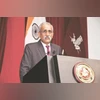
Pankaj Kumar Singh
A month into his appointment, Pankaj Kumar Singh is yet to visit Darjeeling — a sign of deepening Centre-state tensions
Aditi Phadnis
5 min read Last Updated : Nov 30 2025 | 10:51 PM IST

Don't want to miss the best from Business Standard?

Pankaj Kumar Singh, former deputy national security advisor, was appointed an “interlocutor and government representative to look into issues of Darjeeling, Dooars and Terai” on October 22 by an order of the Ministry of Home Affairs. These regions in West Bengal have a largely Gorkhali-speaking population that migrated from Nepal many decades ago. 
While Singh’s office in Delhi is operational, he is yet to visit Darjeeling, a month into his appointment. His absence reflects significant resistance from West Bengal CM and TMC supremo Mamata Banerjee, who has written twice to PM Narendra Modi, most recently earlier this month, condemning what she calls the Centre’s “unilateral and arbitrary action”, which she described as “unconstitutional, without jurisdiction and devoid of legal sanctity”, urging him to rescind the appointment. 
“What the Gorkha people want is a final political settlement,” says S S Ahluwalia, former two-term BJP MP from Darjeeling, echoing a promise in the BJP’s Lok Sabha election manifesto to the Gorkha community of West Bengal. 
The challenge is that the idea of a settlement varies sharply across stakeholders. For Ajoy Edwards, convenor of the Indian Gorkha Janshakti Front and elected member of the Gorkha Territorial Administration Sabha, the “permanent political aspiration” of the Gorkhas has always been separation from Bengal, a demand no political party in the state is willing to consider. 
This yearning for a land that respects the unique culture and history of Indian-domiciled Gorkhas is decades old. As early as 1952, N B Gurung of the All India Gorkha League wrote to then PM Jawaharlal Nehru, reiterating the demand that the “hill people” of Darjeeling, Jalpaiguri and Cooch Behar be separated from “the province of Bengal” — or at the very least, placed in a centrally administered unit, potentially forming a “separate province comprising Darjeeling, Jalpaiguri, Sikkim and Cooch Behar”, citing linguistic, racial and tribal differences. 
These differences were raised again in 1972 when Indira Gandhi visited Darjeeling. In a memorandum, the Gorkha League sought a District Autonomous Council and accelerated development in Darjeeling and surrounding areas. The issue escalated in 1980 with the creation of the Gorkha National Liberation Front (GNLF) by Subhas Ghisingh, former non-commissioned army officer, who revived the demand for Gorkhaland, injecting identity politics into the West Bengal hills. Following a 28-month agitation beginning in 1986, the Darjeeling Gorkha Hill Council (DGHC) was set up in 1988 after a tripartite Darjeeling Accord involving the Centre, the state government and the GNLF — the first administrative body of its kind in India. 
In 2001, Ghisingh pressed for the DGHC’s upgrade to a body under the Constitution’s Sixth Schedule, but his protégé Bimal Gurung opposed the move. Ghisingh resigned in 2008, and in 2011 the DGHC was replaced by the Gorkha Territorial Administration, covering Darjeeling, Kalimpong and Kurseong subdivisions, along with parts of Siliguri. 
The region elects three MLAs to the 294-member Assembly but can influence 15 to 17 more seats. Since 2011-12, a proliferation of political outfits, mostly GNLF offshoots, has reshaped local politics. Some, like Anit Thapa’s Bharatiya Gorkha Prajatantrik Morcha, lean towards the TMC, while others align with the BJP. All back greater Gorkha empowerment and the demand for self-determination. 
Meanwhile, new issues have surfaced, says Darjeeling-based political analyst Swaraj Thapa. People of Nepali origin in India are settled across West Bengal, Sikkim and parts of the Northeast. Tibetans also arrived with the Dalai Lama. While Lepcha and Bhutiya tribes were granted ST status —and Tamang and Limbu were added later at Ghisingh’s insistence — many Nepali sub-groups were excluded. “Only seven of 18 Gorkha sub-tribes were granted ST recognition,” says Raju Bista, BJP MP from Darjeeling. “Gurung, Bhujel, Mangar, Newar, Jogi, Khas, Rai, Sunwar, Thami, Yakkha and Dhimal communities face acute deprivation. They were considered Hill Tribes before Independence but removed from the list without consulting the Gorkhas.” 
Thapa says language is another pressure point. He cites the Rajbangshi tribe, which has lost its script and language and become “Bengali-ised”. Gorkhas face a similar dilemma: Choosing Bangla as the medium of instruction improves prospects for government jobs, but opting for Nepali helps preserve cultural identity. 
Were he permitted to begin his work, the interlocutor would likely tackle these social and cultural issues. But Bengal’s political calculus incentivises the TMC to pitch Gorkhas against Bengalis. “When Mamata Banerjee comes to Darjeeling, all her speeches are in Bangla; she plays loud Rabindra Sangeet. It tells the rest of Bengal: We have conquered the Gorkhas also — at least that’s how we feel,” says Thapa. 
“It is Banerjee’s nature not to cooperate with the Centre on matters concerning Bengal,” says Sayantan Basu, former BJP state general secretary. “She  only wants to politicise problems and show Bengal she’s fighting everything Modiji suggests.” 
With the tea industry struggling and tourists worried about periodic law and order flare-ups, Darjeeling faces existential challenges. “People here have a glimmer of hope that something might happen with the appointment of an interlocutor.  Interlocutors are not new to us; we take them with a pinch of salt. But the BJP has taken an initiative,” says Thapa. Still, a separate Gorkha state remains distant.

One subscription. Two world-class reads.

Already subscribed? Log in

Subscribe to read the full story →
*Subscribe to Business Standard digital and get complimentary access to The New York Times

Smart Quarterly

₹900

3 Months

₹300/Month

SAVE 25%

Smart Essential

₹2,700

1 Year

₹225/Month

SAVE 46%
*Complimentary New York Times access for the 2nd year will be given after 12 months

Super Saver

₹3,900

2 Years

₹162/Month

Subscribe

Renews automatically, cancel anytime

Here’s what’s included in our digital subscription plans

Exclusive premium stories online

  • Over 30 premium stories daily, handpicked by our editors

Complimentary Access to The New York Times

  • News, Games, Cooking, Audio, Wirecutter & The Athletic

Business Standard Epaper

  • Digital replica of our daily newspaper — with options to read, save, and share

Curated Newsletters

  • Insights on markets, finance, politics, tech, and more delivered to your inbox

Market Analysis & Investment Insights

  • In-depth market analysis & insights with access to The Smart Investor

Archives

  • Repository of articles and publications dating back to 1997

Ad-free Reading

  • Uninterrupted reading experience with no advertisements

Seamless Access Across All Devices

  • Access Business Standard across devices — mobile, tablet, or PC, via web or app

Topics :Mamata BanerjeePolitics NewsWest BengalDarjeelingTMC

Next Story



